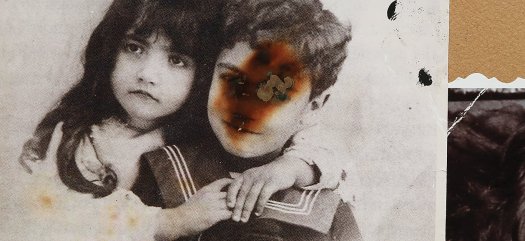
Introduction The term ‘flâneuse’ can be attributed to females who engage in flânerie: the act of observing the city whilst walking.[1] They know themselves to be one of the public, yet they are the binary opposite to the engaged pedestrian – they are a passive spectator.[2] Until the latter half of the nineteenth century, flânerie […]
Susan Sontag — The Vale of Soul-Making
I don’t feel guilt at being unsociable, though I may sometimes regret it because my loneliness is painful. But when I move into the world, it feels like a moral fall–like seeking love in a whorehouse.
— Susan Sontag, As Consciousness Is Harnessed To Flesh: Journals & Notebooks, 1964 – 1980 (FSG, 2012)
Succubations & Incubations Selected Letters of Antonin Artaud (1945-1947)

This selection of letters (1945-1947) from Artaud’s consummate work, Suppôts et Suppliciations [Henchmen and Torturings] translated into English for the first time, provides readers with a vivid, uniquely intimate view of Artaud’s final years. They show Artaud at his most exposed, and they are perhaps his most explosive, tragic, sad, even humorous. Each of the correspondents that came into contact with Artaud during this time were in their own way deeply affected since his project was essentially an “attack / on the mind of the public.”
Commenting on and elaborating key themes from his earlier writing, while venturing into new territory, Artaud recounts his torture and violation in asylums, his crucifixion two thousand years ago in Golgotha, his deception by occult initiates and doubles, and his intended journey to Tibet, where, aided by his “daughters of the heart,” he will finally put an end to these “maneuvers of obscene bewitchment.” Artaud also speaks of his plan to create a “body without organs” and extends this idea to the visual arts, where he argues that painting and drawing must wage a ceaseless battle against the limits of representation.
The apocalyptic vision for mankind that led Artaud on a journey, beginning in Mexico in 1936 and ending, tragically, in Ireland in 1937, with a mental breakdown, silence, and long internment in asylums, concluded with the extremely prolific late period from which these letters were drawn. There is an unmistakable unity of vision that permeates the letters: the vision of an unceasing, ubiquitous, and malignant plot “to close the mouth of lucidity” by any means, and which must be resisted at all costs.
Translated by Peter Valente & Cole Heinowitz
With an introduction by Jay Murphy
Illustrated by Martin Bladh and Karolina Urbaniak
Dogs, Memory, Home, Devastation — ZETEO
Jason Wirth’s Commiserating with Devastated Things is a wonderful book tracing themes in the novels of Milan Kundera—not to mention the resonances of these themes with Virgil, Cervantes, and Hermann Broch (among others). I’ve learned about St. Francis joyously embracing a leper, about Holy Fools in Russian Orthodoxy and in Dostoevsky (in the person of […]
The City As A Work of Art — Andrea Gibbons
Seeing the city as a work of art is a curious way to view a city, I found it an interesting exercise. This book represents quite a masterful look at London, Paris and Vienna, with a splendid raft of photographs, illustrations and quotations. To the greater or lesser extent that I know them, they are…
New York in 2020 feels like Edward Hopper’s city — Ephemeral New York
The exterior city is what unsettles you first. Streets and sidewalks are quiet, lifeless. You see other people going in and out of shops or walking the dog, yet whenever you decide to get some air, six feet away from the occasional passerby, you feel like you’re the only person in all of New York. […]
via New York in 2020 feels like Edward Hopper’s city — Ephemeral New York
Coney Island — For Earth Below
Words Are the Boards Thrown over the Abyss (a text of Paul Valéry translated by Vadim Bystritski) — Before and After Francis Ponge
Words are like boards when projected over some abyss spanned by human intellect. We are allowed a swift passage but not a deliberate stop. A quick one passes safely, but the moment we linger, the time-sensitive tissue rips and everything collapses to meet a bottomless chasm. Les mots sont des planches jetées sur un abîme […]
Henri Michaux – La lettre dit encore… — BEAUTY WILL SAVE THE WORLD
…je vous écris de la Cité du Temps interrompu. La catastrophe lente ne s’achève pas. Notre vie s’écoule, notre vie s’amenuise et nous attendons encore « le moment qui repasse le mur ». Le vieux différend unit le frère au frère. Dans l’enceinte du froid tout le monde enfermé. Ceux qui possédaient possèdent sans plus […]
via Henri Michaux – La lettre dit encore… — BEAUTY WILL SAVE THE WORLD
Manhole covers that left their mark on the city — Ephemeral New York
Looking up at New York’s buildings isn’t the only way to get a sense of the city’s past. Cast your eyes down on the sidewalk and street, and you’ll start seeing an incredible variety of manhole covers—many from the 19th and early 20th centuries. These iron lids serve a utilitarian purpose. But the men who […]
via Manhole covers that left their mark on the city — Ephemeral New York


You must be logged in to post a comment.