What is important, it seems to me, is not so much to defend a culture whose existence has never kept a man from going hungry, as to extract, from what is called culture, ideas whose compelling force is identical to that of hunger.

 – Antonin Artaud

[As quoted in Paul Auster’s The Art of Hunger, Sun & Moon Press, Los Angeles, 1992]

What is an Arcade?

What is an arcade? In its classic sense, the term denotes a pedestrian passage or gallery, open at both ends and roofed in glass and iron, typically linking two parallel streets and consisting of two facing rows of shops and other commercial establishments – restaurants, cafés, hairdressers, etc. “Arcade” is the English name: in French the arcades are known as “passages”, and in German as “Passagen”.

The modern arcade was invented in Paris, and, while the concept was imitated in other cities – there are particularly fine mid-nineteenth century examples in Brussels – the Parisian arcades remain the type of the phenomenon. Benjamin quotes a passage from the Illustrated Guide to Paris, a German publication of 1852, which sums up the arcades’ essence:

“These arcades, a recent invention of industrial luxury, are glass-roofed, marble- panelled corridors extending through whole blocks of buildings, whose owners have joined together for such enterprises. Lining both sides of the corridors, which get their light from above, are the most elegant shops, so that the arcade is a city, a world in miniature, in which customers will find everything they need”.

Christopher Rollason, The Passageways of Paris: Walter Benjamin’s Arcades Project and Contemporary Cultural Debate in the West as found at: http://www.yatrarollason.info/files/BenjaminPassagesYatraversion.pdf  as accessed on 22 September 2017.


Placid small thought no 2

The passage of time (my History) leaves behind a residue that accumulates: photographs, drawings, the corpses of long since dried up felt pens, shirts, non-returnable glasses and returnable glasses, cigar wrappers, tins, erasers, postcards, books, dust and knickknacks: this is what I call my fortune.

–Georges Perec, Species of Spaces and Other Pieces


Foucault on Space

The space in which we live, which draws us out of ourselves, in which the erosion of our lives, our time and our history occurs, the space that claws and gnaws at us, is also, in itself, a heterogeneous space. In other words, we do not live in a kind of void, inside of which we could place individuals and things. We do not live inside a void that could be colored with diverse shades of light, we live inside a set of relations that delineates sites which are irreducible to one another and absolutely not superimposable on one another.

From: Michel Foucault: Of Other Spaces: Utopias and Heterotopias

Architecture /Mouvement/ Continuité , October, 1984 (“Des Espace Autres,” March 1967), 
Translated from the French by Jay Miskowiec)


On Keeping a Writer’s Notebook

By Marcus D. Niski

My love of keeping writer’s notebooks as both a practical endeavour and aesthetic pursuit features heavily here, as does a range of information and insights as to how to get started with keeping your writer’s notebooks and how to maintain the habit as a regular ritual.

Our writing heroes and icons shape our thinking and provide a wellspring of imagination, insight and motivation. In celebrating them, we continue to push forward with our own insights as well as attempt to spur ourselves on towards new heights of discovery.

The pursuit of ‘writing for writing’s’ sake’ – most particularly in my notebooks – has provided me a lifetime of pleasure in absorbing and reflecting upon the world around me. I hope this site will inspire you and similarly urge you to explore the maximum depth of your creativity in whatever field of writing that you engage in.

– Marcus D. Niski,  September 2017

What is a writer actually doing? I put forward as a general proposition that any artist – and I include all creative thinkers – they are trying to make the viewer, the reader, the student aware of what he knows and doesn’t know that he knows.

– William S. Burroughs

Extracted from: The William S. Burroughs Workshop – Jack Kerouac Conference, Naropa University, Bolder Colorado, July 23, 1982 – as Transcribed from the Original Audio Recording by Marcus D. Niski as found at https://archive.org/details/WilliamS.BurroughsOnWriting

Who, or what, is a flâneur?

By Marcus D. Niski

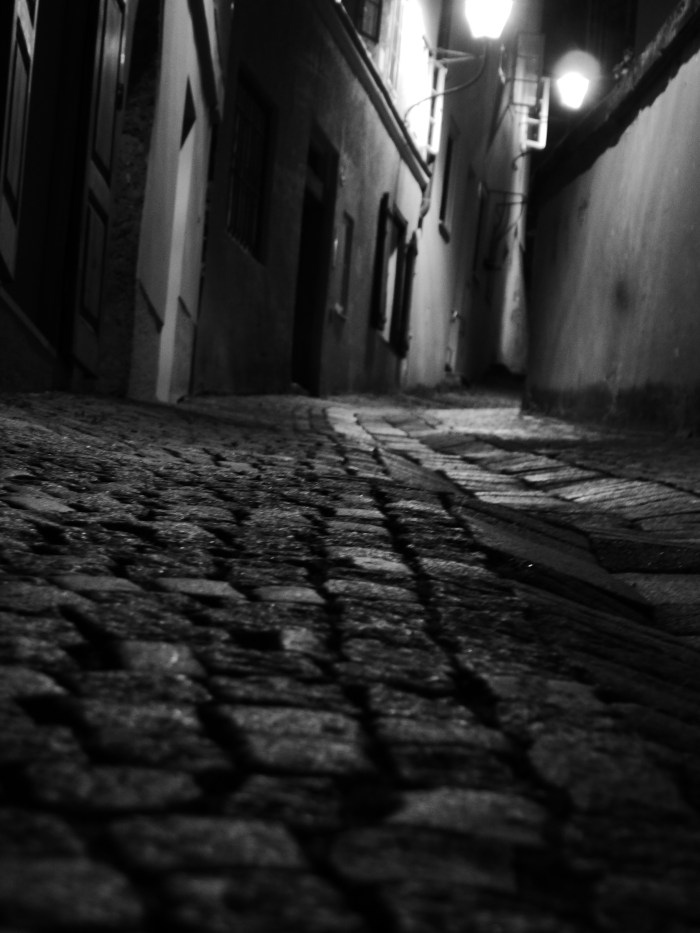
The flâneur – or the notion of the flâneur – is a creation of the nineteenth century Parisian streets. The flâneur is, by definition, an ‘exemplary stroller’ who strolls though the streets at a pace at which observation becomes the centrepoint of his or her experience.

As Edmund White suggests in his stunningly observant account of the flâneur and the ‘paradoxes of Paris’ *, Walter Benjamin was probably one of the most acute observers of the idea of the flâneur and one of literature’s most important writers in documenting the activities of this unique Parisian creature.

For Benjamin, the flâneur ultimately, is –

“… In search of experience, not knowledge…’ [Edmund White, p47]

The flâneur is also by definition not a tourist or pedestrian eager to rapidly ‘consume’ the landscape, but one who is almost overwhelmed by the delectable possibilities of the urban landscape; so much so that he or she is not really sure where to start or where the journey will take them.

Marcus D. Niski (2011)

 * Edmund White, The Flaneur: A Stroll Through the Paradoxes of Paris, Bloomsbury, London, 2001.
 

Ruin — Liminal Narratives

Ruins pose a constant negotiation between glory and dissolution; success and failure; substance and nothingness. They ’embody a set of temporal and historical paradoxes’ (Dillon, p.11). The abandoned warehouse or the tumbledown barn reveal a memory of the past and simultaneously a projection of our own futures. In the medieval motif of The four living […]

via Ruin — Liminal Narratives

… In the streets of Paris, Benjamin earned a living as a journalist while hunting out concrete examples on which to field test and then synthesize cutting-edge social theories. Encouraged by fellow German expatriate author Franz Hessel, he learned how to wander Paris with a voyeuristic curiosity modeled on that of the flaneur — a detached, attentive spectator who believed in the “religious intoxication of great cities” — who passed through every line of Charles Baudelaire’s poetry, especially the groundbreaking volume Les Fleurs du Mal (1857).

– Tim Keane in ‘Walter Benjamin on How to Stop Worrying and Love Late Capitalism’ as found at: https://hyperallergic.com/390574/the-arcades-contemporary-art-and-walter-benjamin-the-jewish-museum-2017/  (July 15, 2017) accessed 19 September 2017 also published at: https://wordpress.com/read/blogs/118955609/posts/390574