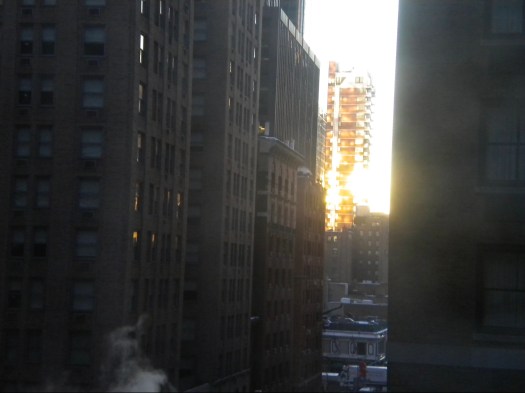
Manhattan Morning, New York City (2010)
Image © Marcus D. Niski 2010-2017

A collection of writings about place space writing and art …
Manhattan Morning, New York City (2010)
Image © Marcus D. Niski 2010-2017

Late Night Writing – Chelsea Hotel, New York City (2010)
Image © Marcus D. Niski 2010-2017
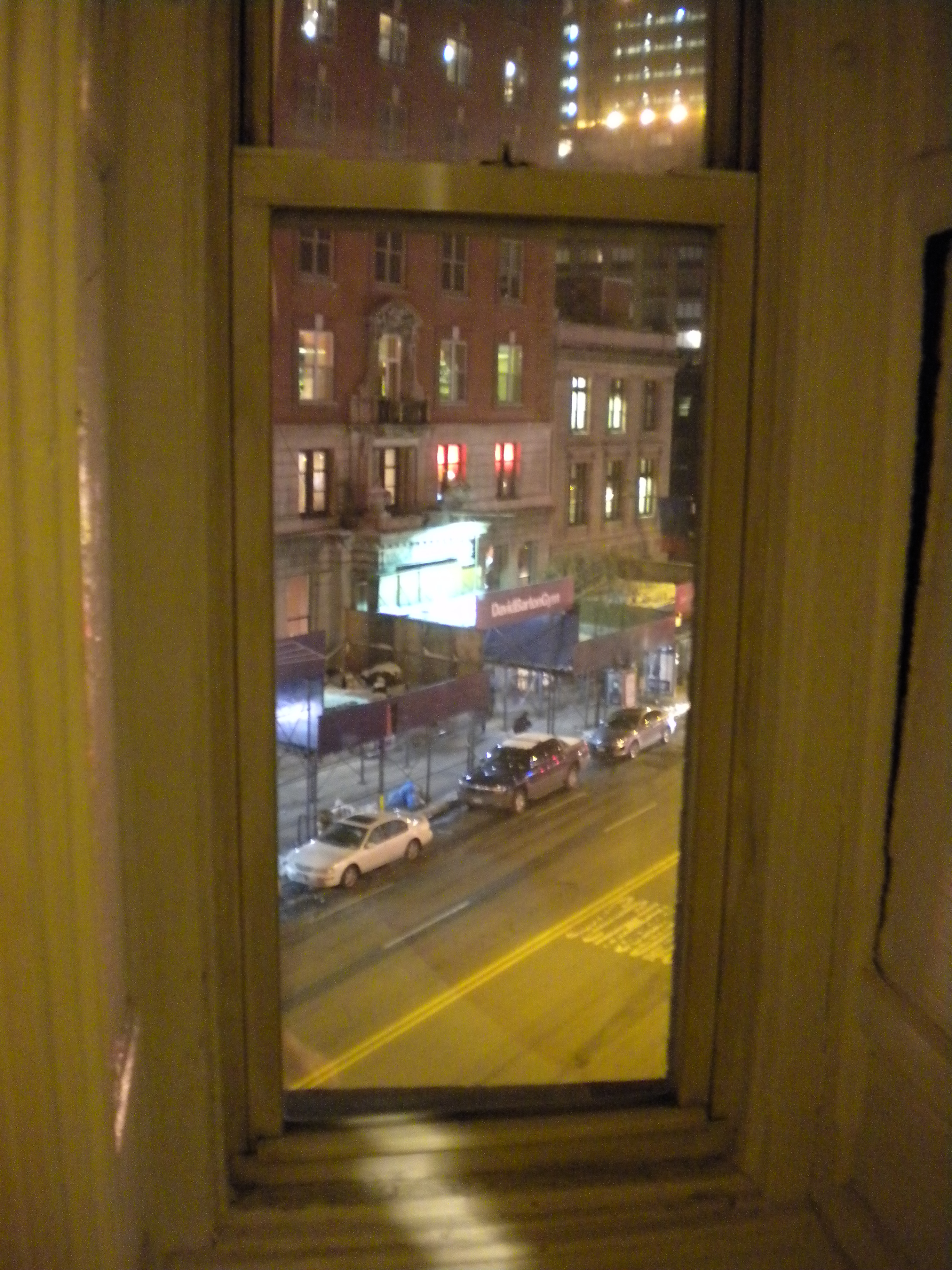
Chelsea Hotel, New York City (2010)
Image © Marcus D. Niski 2010-2017
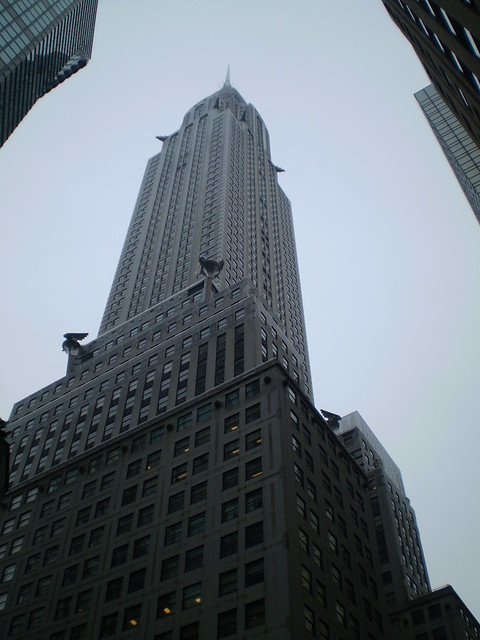
Chrysler Building, New York City (2010)
Image © Marcus D. Niski 2010-2017
A selection from my galley of New York City Photography (2010) as found at: https://www.flickr.com/photos/60074660@N06/sets/72157626040104291/
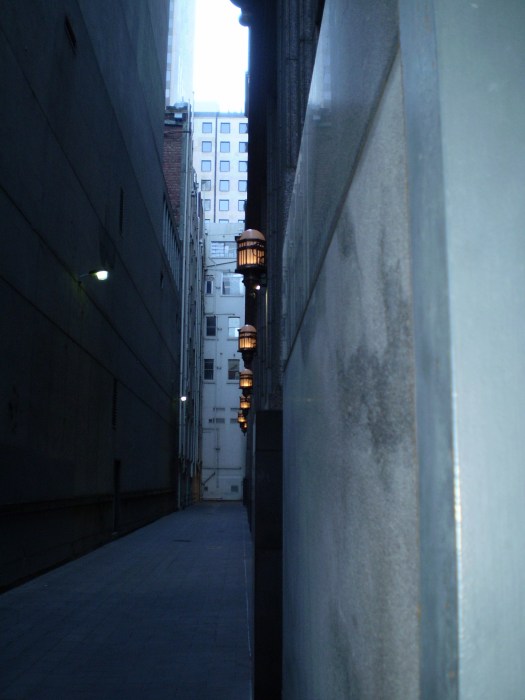
Melbourne Laneways – Fulham Place Image © Marcus D. Niski 2007
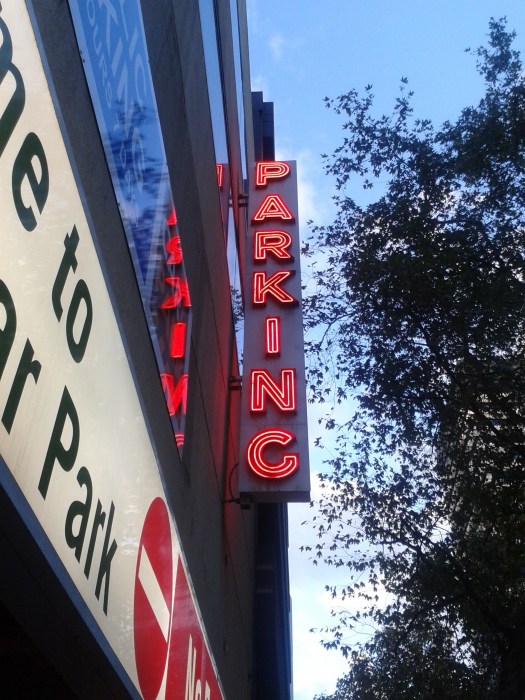
Neon Parking Sign, Bourke St., Melbourne. Image © Marcus D. Niski 2014
By Marcus D. Niski
There is something elegant and peculiarly captivating about neon signs: they have a certain memorizing quality about them no matter how seemingly mundane their messages might be.
My earliest memory of a viewing my first neon sign was that of the ‘The Skipping Girl’ one of Melbourne’s most famous visual landmarks – in reality an elaborate promotional sign for a brand of table vinegar – located along Victoria Street, Abbotsford in the city’s inner suburbs.
While always very low key about it, my father in fact spent some of his early working life in Australia as a graphic designer of neon signs designing several landmark signs as well as later printing light box signage for national advertisers.
Many years ago in the 1990s whilst living in Sydney, I took this photograph of the St James Station entrance located on the northern side of Hyde Park. It has always remained one of my favorite photographs of neons given the electric blue and red hue set against the mundane entrance to one of Sydney’s famous inner-city stations.
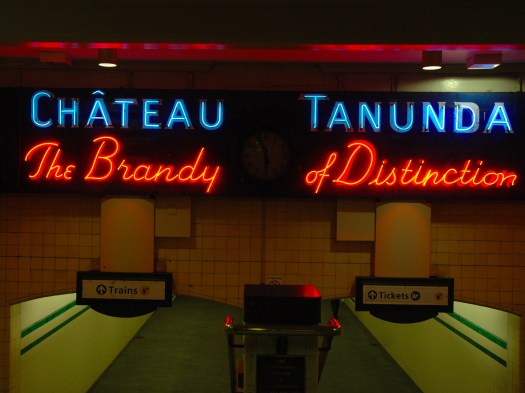 Image © Marcus D. Niski 1995-2017
Melbourne’s famous ‘Skipping Girl’ landmark:
… I’m thinking structures. I’ve always taken it for granted that in literary writing content and form are intertwined, one. Now I’m examining my belief. Iain says that the writer is a person who finds, rather than makes, structures. “I began to see the pattern of the living city in myth,” he tells me. “If you look, you can see the structures that lie underneath.”
“Is this how we write? By seeing? By finding?” “I think so.”
“Then, to write an epic is to see the structure of one’s city or of one’s life as epic?” …
Extracted from: Ian Sinclair an Interview with Kathy Acker in – ‘Writing as Magic in London in Its Summer: Iain Sinclair and the Crafting of Place.’
Read the full interview at: https://www.closeupfilmcentre.com/vertigo_magazine/volume-4-issue-3-summer-2009/writing-as-magic-in-london-in-its-summer/
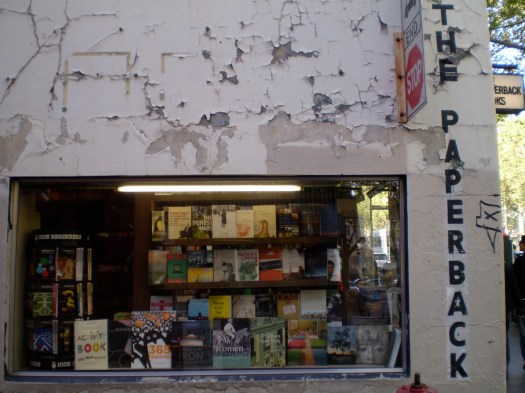 Opposite Pellegrini’s Espresso Bar on the Corner of Bourke Street and Crossley Street lays one of my favorite Melbourne bookshops – The Paperback Bookshop – a Melbourne icon established in the early 1960s.
Image © Marcus D. Niski 2011
 If there’s one thing I find hard to ignore it’s a beautiful voice, and when it rings out in a city’s darkness it’s even more evocative. Scenes like these build up your portfolio so don’t forget to stop and take in the beauty and the skill of these aural performers. Try and capture how people […]
via Street Photography Samples. Gospel Singing — The Street Photographer’s Guide
 Naked Cities Journal
You must be logged in to post a comment.