“I don’t want to be famous. I like to be able to sit in a cafe and watch the world go by and observe people.” – Sophia Myles
via Front row seat to life on the street — Ordinary People Doing Ordinary Things
A collection of writings about place space writing and art …
“I don’t want to be famous. I like to be able to sit in a cafe and watch the world go by and observe people.” – Sophia Myles
via Front row seat to life on the street — Ordinary People Doing Ordinary Things
 Cendrars was, beyond all questions, the pioneer of poetic modernism.
via Blaise Cendrars: A Poet for the Twenty-First Century — Hyperallergic

A windy morning in Fabriano’s Paper and Watermark museum with DiscoverMarche had me smitten. Not many know that the town of Fabriano in the region of Le Marche, Italy has been making paper since the 12th century. Can you imagine how it felt to walk through the doors where this UNESCO creative city has been inspiring […]

Chelsea Hotel, New York City (2010)
Image © Marcus D. Niski 2010-2017
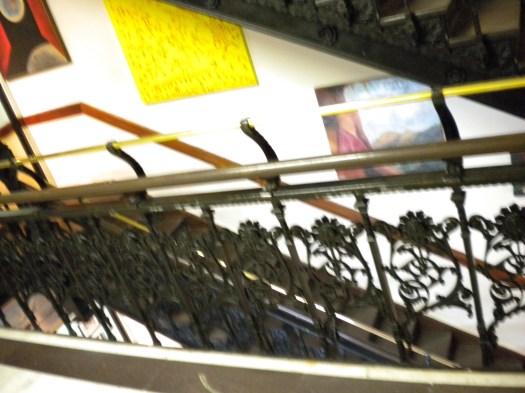
Staircase – Chelsea Hotel, New York City (2010)
Image © Marcus D. Niski 2010-2017
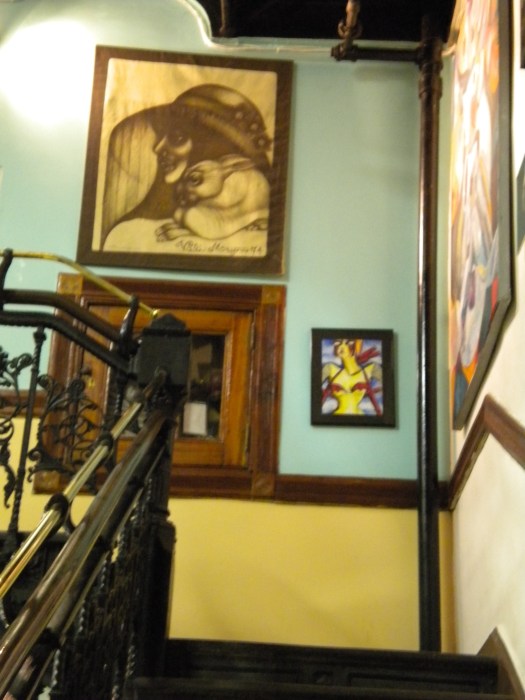
Staircase – Chelsea Hotel, New York City (2010)
Image © Marcus D. Niski 2010-2017
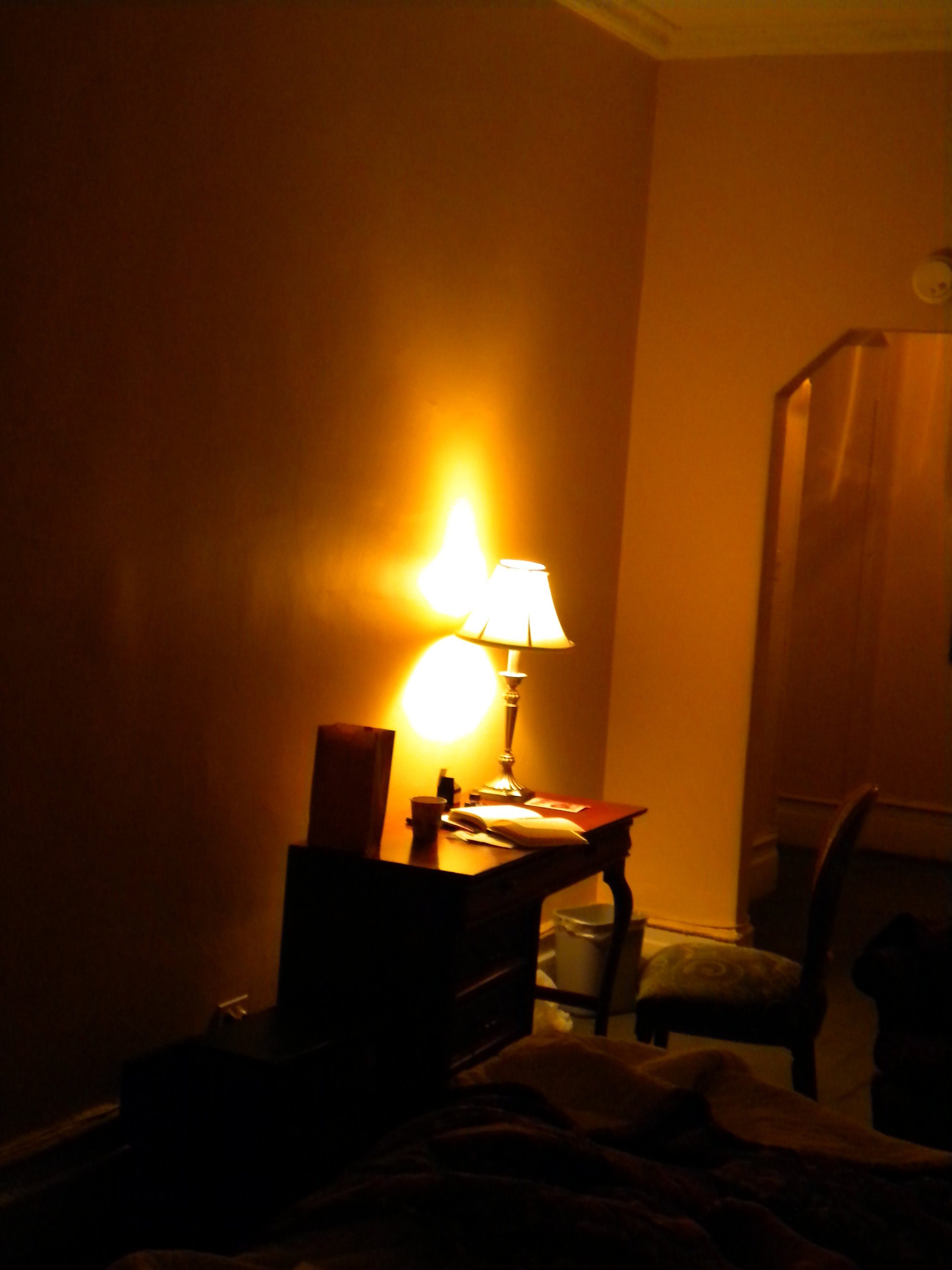
Late Night Writing – Chelsea Hotel, New York City (2010)
Image © Marcus D. Niski 2010-2017
… I’m thinking structures. I’ve always taken it for granted that in literary writing content and form are intertwined, one. Now I’m examining my belief. Iain says that the writer is a person who finds, rather than makes, structures. “I began to see the pattern of the living city in myth,” he tells me. “If you look, you can see the structures that lie underneath.”
“Is this how we write? By seeing? By finding?” “I think so.”
“Then, to write an epic is to see the structure of one’s city or of one’s life as epic?” …
Extracted from: Ian Sinclair an Interview with Kathy Acker in – ‘Writing as Magic in London in Its Summer: Iain Sinclair and the Crafting of Place.’
Read the full interview at: https://www.closeupfilmcentre.com/vertigo_magazine/volume-4-issue-3-summer-2009/writing-as-magic-in-london-in-its-summer/

By Gaurav J. Pathania – The café becomes a site of enunciation of identity, lived experience, and contested meaning, bringing the city inside, but also shielding its regulars from the “crowd” and the “masses” outside.

In my last blog I discussed the act of walking and in particular the figure of the flâneuse in Ruth Orkin’s famous 1951 photograph of a woman walking in Florence. I also briefly touched on the ambulant subjects in Robert Louis Stevenson’s The Strange Case of Dr Jekyll and Mr Hyde and I want to […]
via The Flaneur in Dr Jekyll and Mr Hyde — Mr Hanson’s English
 Naked Cities Journal
You must be logged in to post a comment.