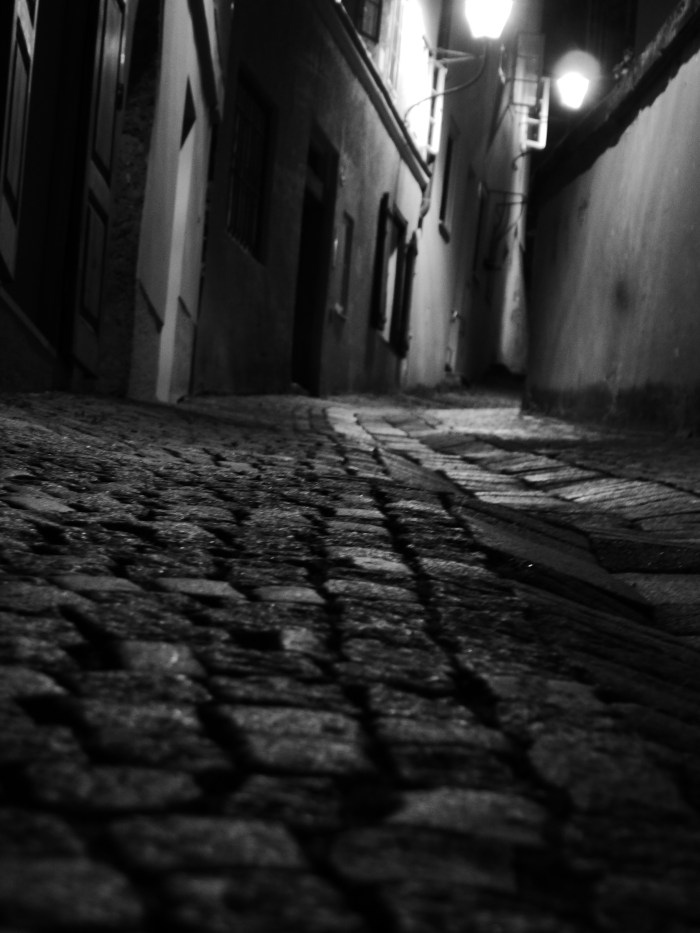
if you like my poems let them walk in the evening, a little behind you then people will say “Along this road i saw a princess pass on her way to meet her lover (it was toward nightfall) with tall and ignorant servants.
— E.E. Cummings, “if you like my poems let them,” Etcetera: The Unpublished Poems of E.E. Cummings. […]
E.E. Cummings — The Vale of Soul-Making
Charles Bukowski — The Vale of Soul-Making
there is a loneliness in this world so great that you can see it in the slow movement of the hands of a clock.
― Charles Bukowski, from “the crunch,” Love Is a Dog from Hell: Poems, 1974-1977. (Ecco; Ecco edition May 31, 2002) Originally published 1977.
Charles Bukowski — The Vale of Soul-Making
Charles Wright — The Vale of Soul-Making
I keep on thinking.
If I sit here for long enough,
A line, one true line,
Will rise like some miraculous fish to the surface,
Brilliant and lithe in the late sunlight,
And offer itself into my hands.
I keep thinking that as the weeks go by,
and the waters never change
— Charles Wright, from “21,” Littlefoot: A Poem (Farrar, Straus, and Giroux, 2007)
Charles Wright — The Vale of Soul-Making
Passivity ( a text of Maurice Blanchot translated by Vadim Bystritski) — Before and After Francis Ponge
Passivity is not just acceptance, not like amorphous, inert matter ready to fit into a form, but passive as under pressure of death — death whose silent intensity does not resemble a welcome reception, leaving its imprint without a word, a body being delegated to the past, a body seen as an interval, a being in suspension, whose syncope is produced by snipping of time and which we can only see as some unarticulated savage history that presently makes no sense. Passive here is a complete absence of narrative, leaving us with an event that cannot be cited and is impossible as a recollection of a forgotten thought, because it was never forgotten, always remaining outside the field of memory.
Passivité n’est pas simple réception, pas plus qu’elle ne serait l’informe et inerte matière prête à toute forme — passives, les poussées de mourir (le mourir, silencieuse intensité ; ce qui ne se laisse pas accueillir ; ce qui s’inscrit sans parole, le corps au passé, corps de personne, le corps de l’intervalle :
[…]
Jorge Luis Borges — The Vale of Soul-Making
Two English Poems
I
The useless dawn finds me in a deserted street-
corner; I have outlived the night.
Nights are proud waves; darkblue topheavy waves
laden with all the hues of deep spoil, laden with
things unlikely and desirable.
Nights have a habit of mysterious gifts and refusals,
of things half given away, half withheld,
of joys with a dark hemisphere. Nights act
that way, I tell you.
[…]
Maria Lazar — the [blank] garden

Maria Lazar (née Maria Franziska Lazar. After marriage, Maria Franziska Strindberg. Pseudonym: Esther Grenen. November 22, 1895 – March 30, 1948) was an Austrian-Jewish writer. Oskar Kokoschka, Dame mit Papagei, 1916 Born in Vienna to a wealthy Jewish family who had converted to Catholicism, Lazar lost her father when she was 13. She attended the […]
Maria Lazar — the [blank] garden
Help Save a Paris Landmark — Travel Between The Pages

I have had the pleasure of visiting Paris many times over the last 40 years. And ever time that I’m in Paris the iconic bookstore Shakespeare and Company is one of my first stops. Even if you have never been to Paris, it’s likely that you have seen photos of the historic shop. Sadly, during […]
Help Save a Paris Landmark — Travel Between The Pages
Edmund White: ‘On the Pleasures and Pains of Writing’
…
INTERVIEWER
Can you discuss your work process? When do you sit down to write, and what do you do to warm up?
WHITE
Oh, it’s very tormented. I try to write in the morning, and I write in longhand, and I write in very beautiful notebooks [White displays a couple of hardbound notebooks filled with thick, hand-laid paper] and with very beautiful pens. I just write away, and then . . . This is a first go at it, and then I start crossing out, and it gets crazier and crazier, with inserts and so on. Finally, two or three years of this go by and then one day I call in a typist. I dictate the entire book to her or him. The typist is a sort of editor in that he or she will tell me what is really terrible and what’s good, or what’s inconsistent and doesn’t make sense. I get together a whole version this way and then I stew over it some more. Eventually my editor reads it, and then he tells me to change things, and it goes on like that. If I write a page a day, I’m lucky. But I write less. And months go by without my writing at all, and I get very crazy when I write! Sick, physically.
…
Edmund White, The Art of Fiction No. 105, as Interviewed by Jordan Elgrably in The Paris Review No. 108, Fall 1988.
Henry Miller — The Vale of Soul-Making
Every man, when he gets quiet, when he becomes desperately honest with himself, is capable of uttering profound truths. We all derive from the same source. there is no mystery about the origin of things. We are all part of creation, all kings, all poets, all musicians; we have only to open up, only to discover what is already there. — Henry Miller
Hannah Arendt – ‘Everything was possible and nothing was true’
‘In an ever-changing, incomprehensible world the masses had reached the point where they would, at the same time, believe everything and nothing, think that everything was possible and that nothing was true.’
Hannah Arendt in The Origins of Totalitarianism as quoted in – ‘Nothing is True, Everything is Permitted’ found at: cakeordeathsite – nothing is true everything is permitted
 Naked Cities Journal
You must be logged in to post a comment.