
… und alles Gute im Neuen Jahr!
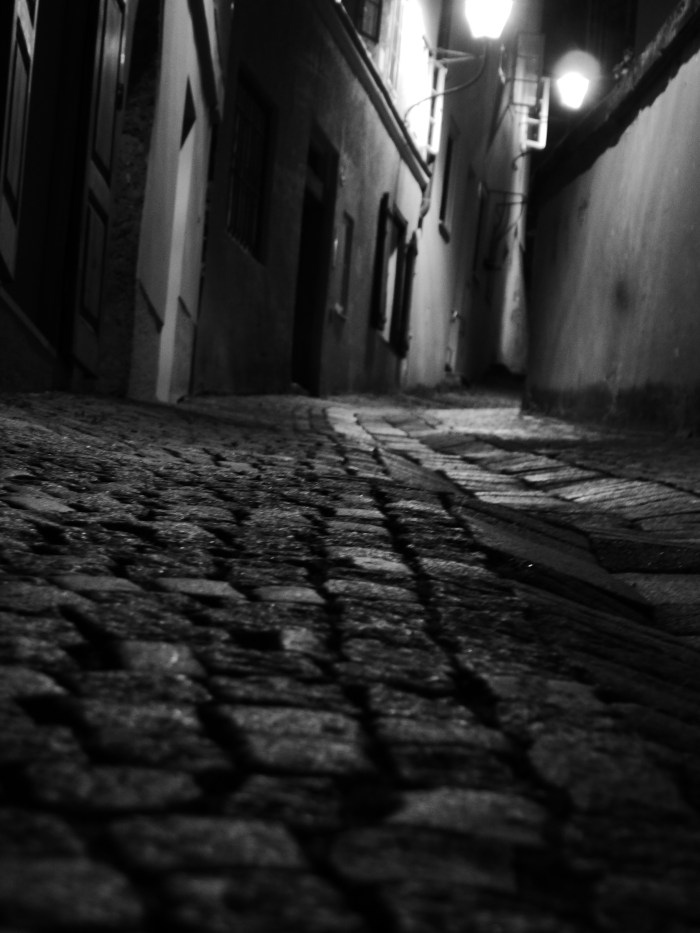
A collection of writings about place space writing and art …
“I don’t want to be famous. I like to be able to sit in a cafe and watch the world go by and observe people.” – Sophia Myles
via Front row seat to life on the street — Ordinary People Doing Ordinary Things
… I’m thinking structures. I’ve always taken it for granted that in literary writing content and form are intertwined, one. Now I’m examining my belief. Iain says that the writer is a person who finds, rather than makes, structures. “I began to see the pattern of the living city in myth,” he tells me. “If you look, you can see the structures that lie underneath.”
“Is this how we write? By seeing? By finding?” “I think so.”
“Then, to write an epic is to see the structure of one’s city or of one’s life as epic?” …
Extracted from: Ian Sinclair an Interview with Kathy Acker in – ‘Writing as Magic in London in Its Summer: Iain Sinclair and the Crafting of Place.’
Read the full interview at: https://www.closeupfilmcentre.com/vertigo_magazine/volume-4-issue-3-summer-2009/writing-as-magic-in-london-in-its-summer/

“Art is restoration: the idea is to repair the damages that are inflicted in life, to make something that is fragmented – which is what fear and anxiety do to a person – into something whole.”
– Louise Bourgeois. French, American, sculptor, installation artist
Destiny never consists in step-by-step deterministic relations between presents which succeed one another according to the order of a represented time. Rather, it implies between successive presents non-localisable connections, actions at a distance, systems of replay, resonance and echoes, objective chances, signs, signals, and roles which transcend spatial locations and temporal successions. — Gilles Deleuze, […]
… The modern age, Benjamin suggests, is defined by this sense of the precariousness of the past. Where history and tradition were once things to be handed down, generation by generation, they are now fleeting presences, which must be trapped in the same way birds or ghosts are trapped—deviously, by sideways approaches. “To articulate the past historically does not mean to recognise it ‘the way it really was,’ ” he writes. “It means to seize hold of a memory as it flashes up at a moment of danger.” …
– From Walter Benjamin’s genius for surreal visions by Adam Kirsch as found at: https://www.prospectmagazine.co.uk/other/flights-of-the-dream-bird
Find meaning. Distinguish melancholy from sadness. Go out for a walk. It doesn’t have to be a romantic walk in the park, spring at its most spectacular moment, flowers and smells and outstanding poetical imagery smoothly transferring you into another world. It doesn’t have to be a walk during which you’ll have multiple life epiphanies […]
Albert Camus on the therapeutic joys and benefits of walking via Albert Camus — The Vale of Soul-Making
…
But now it is evening. It is that strange, equivocal hour when the curtains of heaven are drawn and cities light up. The gas-light makes a stain upon the crimson of the sunset. Honest men and rogues, sane men and mad, are all saying to themselves, ‘The end of another day!’ The thoughts of all, whether good men or knaves, turn to pleasure, and each one hastens to the place of his choice to drink the cup of oblivion. Monsieur G. will be the last to linger wherever there can be a glow of light, an echo I of poetry, a quiver of life or a chord of music; wherever a passion can pose before him, wherever natural man and conventional man display themselves in a strange beauty, wherever the sun lights up the swift joys of the depraved animal! ‘A fine way to fill one’s day, to be sure’ …
– Charles Baudelaire, The Artist, Man of the World, Man of the Crowd, and Child in The Painter of Modern Life and Other Essays (1863) , Translated and Edited by Jonathan Myne, Phaidon, 1964, P 11
I write, I extend my hand; without my knowing it, this is already a prayer, I extend my hand to you so that you will exist because you do exist, beyond my fingers, your fingers, without my knowing it this is already a response, already I draw to my side the site for you, with […]
But there is also another sense in which seeing comes before words. It is seeing which establishes our place in the surrounding world; we explain that world with words, but words can never undo the fact that we are surrounded by it. The relation between what we see and what we know is never settled.
– John Berger in Ways of Seeing
 Naked Cities Journal
You must be logged in to post a comment.