” …
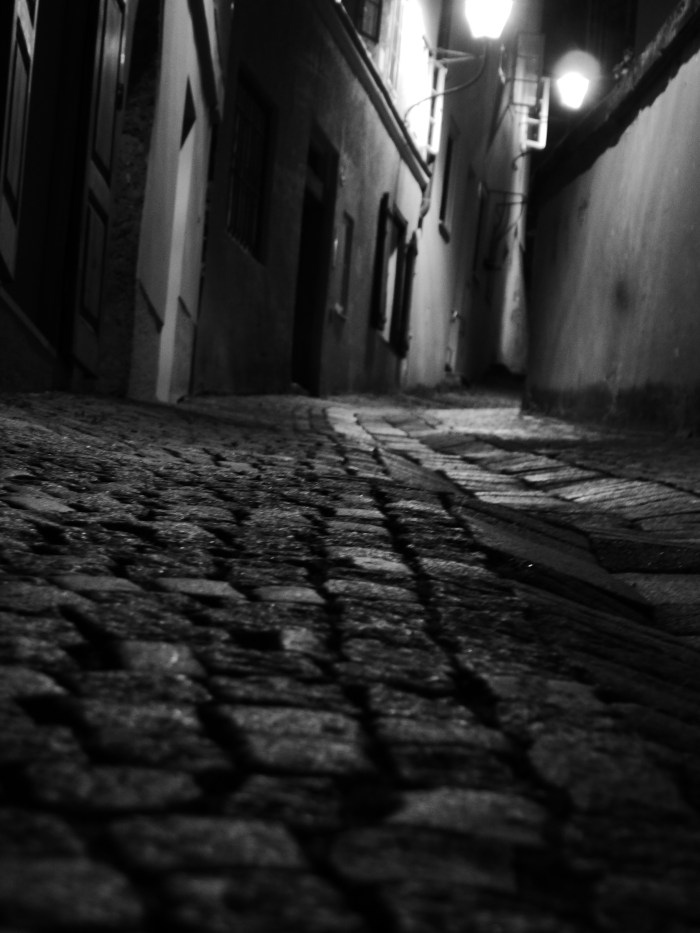
The Arcades book [Das Passagen-Werk] was never intended to be an economic history (though part of its ambition was to act as a corrective to the entire discipline of economic history). An early sketch suggests something far more like his autobiographical work, A Berlin Childhood [:] “One knew of places in ancient Greece where the way led down into the underworld. Our waking existence likewise is a land which, at certain hidden points, leads down into the underworld – a land full of inconspicuous places from which dreams arise. All day long, suspecting nothing, we pass them by, but no sooner has sleep come than we are groping our way back to lose ourselves in the dark corridors. By day, the labyrinth of urban dwelling resembles consciousness; the arcades… issue unremarked on to the streets. At night, however, under the tenebrous mass of the houses, their denser darkness protrudes like a threat, and the nocturnal pedestrian hurries past – unless, that is, we have emboldened him to turn into a narrow lane.”
Two books served Benjamin as models: Louis Aragon’s A Paris Peasant, with its affectionate tribute to the Passage de L’Opéra, and Franz Hessel’s Strolling in Berlin, which focuses on the Kaisergalerie and its power to summon up the feel of a bygone era. In his book, Benjamin would try to capture the “phantasmagoric” experience of the Parisian wandering among displays of goods, an experience still recoverable in his own day, when “arcades dot the metropolitan landscape like caves containing the fossil remains of a vanished monster: the consumer of the pre-imperial era of capitalism, the last dinosaur of Europe”.
… “
An extract from JM Coetzee’s highly engaging essay on Walter Benjamin: ‘The man who went shopping for truth’ as found at:
https://www.theguardian.com/books/2001/jan/20/history.society as accessed 30 September 2017-09-30

 Naked Cities Journal
You must be logged in to post a comment.