I don’t do anything with my life except romanticize and decay with indecision.
— Allen Ginsberg, The Book of Martyrdom and Artifice: First Journals and Poems: 1937-1952. (Da Capo Press; 1st Da Capo Press Ed edition November 1, 2006)
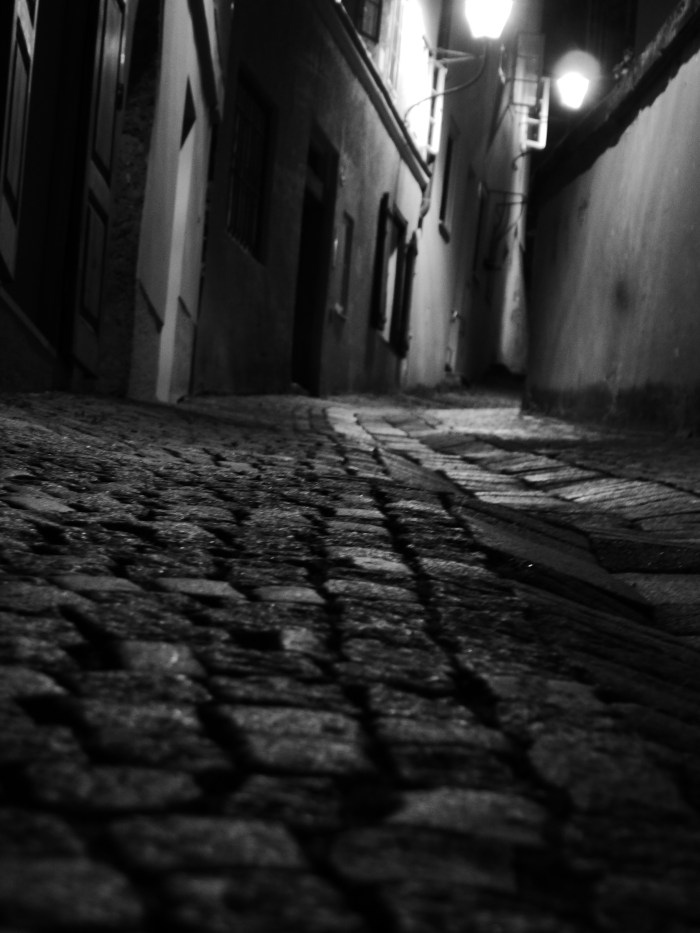
A collection of writings about place space writing and art …
I don’t do anything with my life except romanticize and decay with indecision.
— Allen Ginsberg, The Book of Martyrdom and Artifice: First Journals and Poems: 1937-1952. (Da Capo Press; 1st Da Capo Press Ed edition November 1, 2006)

Ma colère ne changera pas les choses du tout au tout, si, elle les changera du tout au tout, ce qui veut dire que j’en viendrai à ce que je ne cesse de regretter de ne pas être : un homme différemment conformé, capable de trouver le verbe rétensif, réservé, recoudé, abstensif, affirmatif, dont toutes […]
via Antonin Artaud – Ma colère… — BEAUTY WILL SAVE THE WORLD
“Even aimless journeys have a purpose.” Tony Horwitz, 1959-2019, author, journalist, Pultizer Prize winner, quote from “One for the Road“
via In Memory: “Even aimless journeys have a purpose.” — Art of Quotation
New York was an inexhaustible space, a labyrinth of endless steps, and no mater how far he walked, no matter how well he came to know its neighborhood and streets, it always left him with the feeling of being lost. Lost, not only in the city, but within himself as well. Each time he took a walk, he felt as though he were leaving himself behind, and giving himself up to the movement of the streets, by reducing himself to a seeing eye, he was able to escape the obligation to think, and this, more than anything else, brought him to a measure of peace, a salutary emptiness within… Motion was of the essence, the act of putting one foot in front of the other and allowing himself to follow the drift of his own body. By wandering aimlessly, all places became equal, and it no longer mattered where he was. On his best walks, he was able to feel that he was nowhere. And this, finally, was all he ever asked of things: to be nowhere. New York was the nowhere he had built around himself, and he realized that he had no intention of ever leaving it again.
Paul Auster in City of Glass as quoted in Paul Auster’s New York, Henry Hold and Company, New York)
The feeling that emerges from these glimpses of city life is roughly equivalent to what one feels when looking at a photograph. Cartier-Bresson’s “decisive moment” is perhaps the crucial idea to remember in this context. The important thing is readiness: you cannot walk out into the street with the expectation of writing a poem or taking a picture, and yet you must be prepared to do so whenever the opportunity presents itself. Because the “work” can come into being only when it has been given to you by the world, you must be constantly looking at the world.
From: The Art of Hunger, as quoted in Paul Auster’s New York, Henry Hold and Company, New York)
Life is tragic simply because the earth turns and the sun inexorably rises and sets, and one day, for each of us, the sun will go down for the last, last time. Perhaps the whole root of our trouble, the human trouble, is that we will sacrifice all the beauty of our lives, will imprison […]
The brook will nonetheless teach you to speak, in spite of sorrows and memories.
— Gaston Bachelard, Earth and Reveries of Will: An Essay on the Imagination of Matter. (Dallas Inst Humanities & Culture, September 1, 2002) Originally published 1948.
“Magic comes through you – you don’t own it”
– Robby Krieger, guitarist, songwriter: Light My Fire (The Doors)
via “Magic comes through you – you don’t own it” — Art of Quotation

“I am not sure that I exist, actually. I am all the writers that I have read, all the people that I have met, all the women that I have loved; all the cities I have visited”
– Jorge Luis Borges, writer
I am too often continuously lonely, having nothing to articulate, defend, expose, or even occasionally justify.
— Albert Camus, Notebooks 1951-1959 (Ivan R. Dee Publisher, 2008; first published 1989)
 Naked Cities Journal
You must be logged in to post a comment.