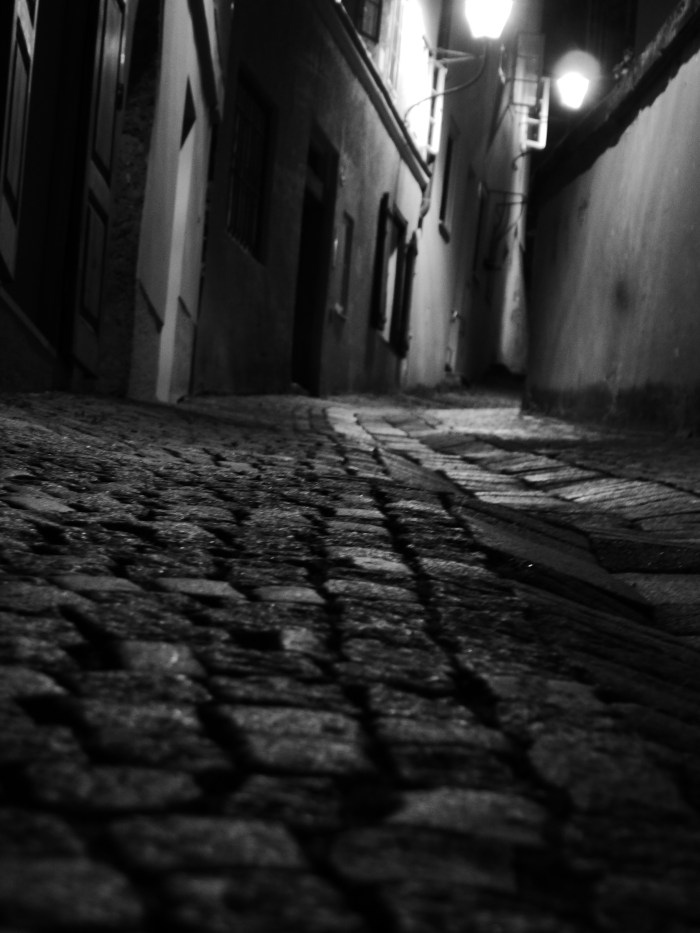
The flâneur – or the notion of the flâneur – is a creation of the nineteenth century Parisian streets. The flâneur is, by definition, an ‘exemplary stroller’ who strolls though the streets at a pace at which observation becomes the centrepoint of his or her experience.
As Edmund White suggests in his stunningly observant account of the flâneur and the ‘paradoxes of Paris’ *, Walter Benjamin was probably one of the most acute observers of the idea of the flâneur and one of literature’s most important writers in documenting the activities of this unique Parisian creature.
For Benjamin, the flâneur ultimately, is –
“… In search of experience, not knowledge…’ [Edmund White, p47]
The flâneur is also by definition not a tourist or pedestrian eager to rapidly ‘consume’ the landscape, but one who is almost overwhelmed by the delectable possibilities of the urban landscape; so much so that he or she is not really sure where to start or where the journey will take them.
Huncke began to rap. Huncke raps beautifully, the sound of his magnificent voice—all that seems intact in his devastated body—as tantalizing as the content. He has so much to rap about, the days with Burroughs, the trials and woes of Ginsberg, the gilded gossip about the beats a decade ago and last week. It is all that he has, his memories and a talent for recalling them. It is not quite enough, but he gets by.
Herbert Edwin Huncke undoubtedly ranks amongst one of the most fascinating yet underestimated figures of the ‘Beat’ world.
Street urchin, raconteur, hustler, and chronicler of New York’s street life, Huncke was a unique figure in New York’s literary scene whose presence was reluctantly – but ultimately – acknowledged as a testament to the power and simplicity of his storytelling. Huncke’s notebooks also serve as a testimony to his attempts to document his many encounters at street level and are indeed fascinating original chronicles that capture elements of his often turbulent but always colourful life.
Born into a middle class family in Greenfield, Massachusetts, Huncke’s colorful life was shaped early on. A restless child and “chronic runaway,” Huncke hit New York City permanently in 1939 at the age of 24, immediately gravitating to Forty-Second Street where he began hustling for sex.
Widely immortalized in the literature of his confrères — William Burroughs, Jack Kerouac, Allen Ginsberg, and John Clellon Holmes — Huncke served as a model for literary characters such as Elmo Hassel in Kerouac’s On The Road and Herman in Burroughs’ Junky (amongst many other literary characterizations).
As a “Virgilian guide” to New York’s underworld, Huncke would skilfully guide Burroughs into the subterranean world of narcotics, as well as provide a great degree of source material for his literary adventures. Yet Huncke’s own creative endeavors have often taken a back seat to those of his contemporaries.
Throughout his long and often tumultuous life, Huncke wrote his observations, reflections, and vignettes in a series of notebooks [1]. This stock of tales undoubtedly underpinned the Huncke mythology. As long time friend and confidant Raymond Foye recollects:
There remains an indelible image of Herbert Huncke the writer, frozen forever in time: homeless and alone, couched in a Times Square pay toilet with notebook on knees, furtively composing his latest tale from the underground.
– Raymond Foye in The Herbert Huncke Reader, William Morrow & Co, New York.
Huncke’s notebooks also form an evocative record of his trials and tribulations as a sage and survivor on New York’s often brutal and unforgiving streets. Huncke’s notebook revelations also provide an insight into “a way of life, a vocabulary, references, a whole symbol system” (as Burroughs put it in Junky) that has now largely disappeared. The world of “crash pads, speakeasies, [and] all-night jam sessions with Charlie Parker or Dexter Gordon” were part of the “carnie” world that informed Huncke’s reflections on an often chaotic, always kaleidoscopic culture. Indeed, the frustrations of Huncke’s itinerant existence are eloquently expressed in this entry in his notebooks:
lost to the streets — lost completely to a life I once knew — stealing — junk– all night wandering– thru the streets — lost completely to a life I once knew – — stealing — junk all night wandering thru the city — no pads– no friends — no way of life – almost convinced prison is a solution — shriveling within at the mere thought — wishing for death — willing death… [Untitled MS Page, Notebook and Diary excerpts, 1959-1960] [2]
A master storyteller, raconteur and polished performer, Huncke would often use his considerable verbal skills to cadge money, drinks and other necessities from his often wary and weary friends. In this vivid passage from Frank McCourt’s Teacher Man, McCourt describes a typical encounter with Huncke on one of his visiting rounds cadging whatever spare change he could towards his version of what he saw as ‘the necessities of life’:
I stepped into the hallway for one of our brief occasional conferences where he explained he happened to be in this neighborhood and he was thinking about me and wondered how is was doing. Also, he happened to be caught short for necessities and wondered if I might have any spare change about me. He appreciated past kindnesses and even though he saw little possibility of repayment he would always remember me warmly. It was such a pleasure to visit me here and to see the youth of America, these beautiful children, in such capable and generous hands. He said thanks and he might see me soon at Montero’s Bar in Brooklyn, a few blocks from his apartment. In a few minutes the ten dollars I slipped him would be passed to a Stuyvesant Square drug dealer.
That’s Huncke, I told them. Pick up any history of recent American writing or the Beat Generation and in the index you’ll find Huncke, Herbert.
Alcohol is not his habit but he’ll kindly allow you to buy him a drink at Montero’s. His voice is deep, gentle and musical. He never forgets his manners and you’d rarely think of him as Huncke the Junkie. He respects law and obeys none of it.
He’s done jail time for pickpocketing, robbery, possession of drugs, selling drugs. He’s a hustler, a con man, a male prostitute, a charmer, a writer. He is given credit for coining the term Beat Generation. He uses people until he exhausts their patience and money and they tell him, Enough Huncke. Out, out already. He understands and never carries grudges. It’s all the same to him. I know he’s using me, but he knew everyone in the Beat movement and I listen to him talk about Burroughs, Corso, Kerouac, Allen Ginsberg. R’lene Dahlberg told me that Ginsberg once compared Huncke to St. Francis of Assisi. Yes, he’s a criminal, an outlaw, but he steals only to sustain his drug habit and makes no profit out of his activities.
– Frank Mc Court’s portrait of Herbert Huncke in Teacher Man, Scribner, New York, 2005 (p 250-251).
Huncke’s literary legacy lives on in a number of works that were published in his lifetime [3] as well as a definitive collection of writings – The Herbert Huncke Reader – collected together by Benjamin G. Schafer with an Introduction by Raymond Foye as well as a superb Biographical Sketch of Huncke written by Huncke’s Literary Executor Jerome Poynton. [4]
William S. Burroughs acknowledged the “extraordinary” nature of Huncke’s experiences that were “quite genuine” in his Forward to The Herbert Huncke Reader in the following brief remarks –
In ‘The Thief’s Journal’, Genet says there are very few people who have earned the right to think. Huncke had adventures and misadventures that were not available to middle-class, comparatively wealthy college people like Kerouac and me: “Some write home to the old folks for coin. That’s their ace in the hole.” Huncke had extraordinary experiences that were quite genuine. He isn’t a type you find anymore.
– William S. Burroughs in The Herbert Huncke Reader, William Morrow & Co, New York.
Huncke was undoubtedly a unique character in the history of Times Square lore [5]: a “genuine” character of the streets who wielded far more influence over the imaginations of the founding fathers of the American Beat movement than he is often given credit for.
Guilty of Everything: The Autobiography of Herbert Huncke (New York: Paragon House Publishers, 1990), Edited by Don Kennison, foreword by William S. Burroughs. ISBN1-55778-044-7
The Evening Sun Turned Crimson (Cherry Valley, NY: Cherry Valley Editions, 1980), ISBN0-916156-43-5.
Huncke’s Journal (Poets Press, 1965). Edited by Diane Di Prima. Foreword by Allen Ginsberg.
The Herbert Huncke Reader Edited by Benjamin Schafer (New York: Morrow, 1997), ISBN0-688-15266-X
Again–The Hospital (White Fields Press, Louisville, 1995). 1/50 copies. (Broadside; single sheet, measuring 12 by 22 inches, illustrated with a photograph of Huncke.)
Herbert E. Huncke 1915-1996 (New York: Jerry Poynton 1996). (Limited edition of 100 copies of the program for the Herbert Huncke memorial at Friends Meetinghouse, New York City. Includes original texts.)
From Dream to Dream (Dig It! 567912-2, Music & Words, Netherlands, 1994, CD)
Herbert Huncke – Guilty of Everything. Double-CD of Huncke’s 1987 live reading at Ins & Outs Press, Amsterdam, the Netherlands. Co-production released by Unrequited Records, San Francisco (2012).
[4] The full text of Jerome V. Poynton’s biographical sketch of Hunkce can be found at http://huncketeacompany.com/about/ which celebrates Huncke’s life and Centennial Year (1915–2015).
The Automat has an unlikely place in the pantheon of American Literary History. At once a place of simplicity, convenience and stark utilitarian dining, the Automat chains of New York City – dominated by Horn & Hardart and Bickfords – became the meeting places of some of America’s most famous and infamous literary figures. As legend would have it, a cavalcade of some of America’s most important writers, artists and playwrights would grace the shores of the humble Automats most notably Bickfords located on West 42 Street where Beat luminary Herbert Huncke was said to be almost an permanent fixture. [1]
From William S. Burroughs and Jack Kerouac, to Woody Allen, Neil Simon, Patti Smith – amongst countless legions of other lesser well-known writers, artists and intellectuals – many notable New York City writers are said to have imbibed in, and in many instances, immortalized the humble Automat in their novels, short stories, plays, and films. Indeed, the Automat seemed like a writer’s domiciliary dream come true: what was there not to like about Automats given the perfect combination of enticements for any malnourished, impecunious writer or artist – cheap food (relatively), 24 hour convenience, winter warmth, and the company of like-minded eccentric souls. Accordingly, playwright Neil Simon is said to have proudly declared: “The Automat! The Maxim’s of the disenfranchised”.
The most potent “secret weapon” of the Automat was undoubtedly, as Bill Demain writes, the freshly brewed coffee [!] :
For all the good food, the Automat’s real secret weapon was its coffee. Horn & Hardart popularized fresh drip-brewed coffee in New York. Prior to the Automat, coffee was often harsh and bitter, boiled and clarified with eggshells. The Automat’s smooth aromatic brew flowed regally from ornate brass spigots in the shape of dolphin heads. In their heyday, Automats sold over 90 million cups of their fresh-brewed coffee each year. And they were committed to keeping it fresh. When an Automat employee brewed coffee, they filled out a time card. After twenty minutes, they discarded whatever coffee was left and made a fresh pot. If there was any doubt about Horn & Hardart’s commitment to java, the Automat even adopted Irving Berlin’s “Let’s Have Another Cup Of Coffee” as their unofficial theme song.
The demise of the Automats as a night-time creative and culinary haven was said (amongst a range of complex factors) to have coincided with a dramatic loss of night-time patronage due to the perceived lack of safety at night during the period of the 70s and 80s when New York experienced a wave of muggings and rising levels of street crime leading many residents to shy away from the tradition of frequenting the many Automats dotted around Manhattan at night.
While the Automat may have physically disappeared from the presence of Manhattan’s unique urban landscape, it remains forever immortalized in literature and American art most notably in Edward Hopper’s beloved painting Automat (1927) which “portrays a lone woman staring into a cup of coffee in an Automat at night.”
Patti Smith similarly immortalizes her reminiscences of the Automat which she often frequented with her partner and muse Robert Mapplethorpe in this passage from Just Kids describing her encounter with Allen Ginsberg who provides her with some spare change for a cheese-and lettuce sandwich –
Horn and Hardart, the queen of Automats, was just past the tackle shop. The routine was to get a seat and a tray, then go to the back wall where there were rows of little windows. You would slip some coins into the slot, open the glass hatch, and extract a sandwich or fresh apple pie. A real Tex Avery eatery. My favorite was chicken potpie or cheese and mustard with lettuce on a poppy seed roll. Robert liked their two specialties, baked macaroni and cheese and chocolate milk, but for a girl raised on Bosco and powdered milk, it was always too thick, so I just got a coffee.
I was always hungry. I metabolized food quickly. Robert could go without eating for much longer than me. If we were out of money we just didn’t eat. Robert might be able to function, even if he got a little shaky, but I would feel like I was going to pass out. One drizzly afternoon I had a hankering for one of those cheese-and-lettuce sandwiches. I went through our belongings and found exactly fifty cents. slipped on my gray trench coat and Mayakovsky cap, and headed to the Automat.
I got my tray and slipped in my coins but the window wouldn’t open. I tried again without luck and then I noticed the price had gone up to sixty-fve cents. I was disappointed, to say the least, when I heard a voice say, “Can I help?’
I turned around and it was Allen Ginsberg…
He told me he was writing a long elegy for Jack Kerouac who had just recently passed away. “Three days after Rimbaud’s birthday,” I said. I shook his hand and we parted company.
– From: Patti Smith in Just Kids, Bloomsbury, London, 2010.
William S. Burroughs described the generalized impact of gentrification in his elegant observation that ‘all the angels are leaving all of the alcoves’ conveying a sense of damage, loss and change in the face of relentless ‘progress’ often at the cost of simplicity and tradition. The Automat, as does so many other urban phenomenon of previous ages and epochs, seems relegated to a bygone era now fortuitously frozen in time in some of America’s great art and literature: a legacy we can be most sincerely grateful for.
Marcus D. Niski, July 2017
[1] Huncke was a legendary story teller and it doesn’t take too much imagination to conjure him up engaging in one of his famous all-night “bullshit sessions” [as Huncke himself would refer to similar sessions at the Chelsea Hotel as documented in Francois Bernadi’s superb short film Original Beats] at Bickfords surrounded by various acolytes, misfits and colorful characters of the night.
How do we live in our cities? How do we meaningfully interact with them in a world ever-increasingly devoted to time-functional tasks and the economic engine that has become the driving force behind all of the world’s great cities?
Our challenge is to slow down, to see and notice our cities and engage with them at the microcosmic level to enjoy the myriad small things that go to make up the joys of urban environment as well as our own habitation within it.
My interest in these questions was profoundly inspired the work of George Perec, most particularly, his brilliant collection of meditations on place and space Species of Spaces and Other Pieces which take us from the street, to the apartment and even to the writing desk in an examination of how we interact with our spaces both public and private.
Perec was a master of what I call ‘writing the mundane’: through taking time to dig deeply into the everyday, to see and notice the world around us with acute attention to detail, Perec becomes a master of taking such seemingly mundane interactions – the objects on my work-table, what I can observe in a public square or street, what I can say about the private spaces that I live in – and turning them into some of the most insightful and imaginative literary depictions of the arts of everyday life.
From the village to the mega-city we live in a kaleidoscope of cultures that are as infinitely diverse as the stories of that diversity which emerge from the streets, lanes, gutters and built environments envelope them.
Naked Cities Journal is about sharing these stories of the minutiae of everyday life from different cultures and different storytellers from around the globe.
The camera eye is a technique that uses acute observation as a basis for writing. The camera eye implies taking visual snapshots of scenes from life and transferring those observations into immediate textual portraits of the observed phenomenon.
In its poetic form, the work of Blaise Cendrars is probably one of the best examples of poetry based on exceptional observational attention to detail from scenes observed in life.
In the typically flamboyant style that Cendrars would become famous for throughout his writing life, Cendrars embarked upon a series of poems known as the Kodak Poems(1924) that attempted to employ a technique of ‘verbal photography’ which, as Anne Reverseau* writes, was aimed at “… convey[ing] a cinematographic or photographic model [of poetry] … we are reading descriptive poetry and vignettes by a writer-reporter. The “documentary” aesthetic thus sets the “horizon of expectation” for these poems…”
Whilst Cendrars was controversially accused of in fact using a montage of cut-up texts plagiarized “…from the adventure novels of Gustave Le Rouge…” – the ruse later allegedly admitted by Cendrars himself (which is typical of Cendrars’ own mischievous self-mythologizing as a writer) – Cendars nevertheless demonstrates himself to be an uncanny master of the use of visual imagery or ‘cinepoetics’ in his texts whether using his own words or allegedly appropriating those of another writer (Kathy Acker is worth mentioning here as a contemporary reference point for similar controversies embroiling her work).
The Kodak poems saga no doubt represents just one of the many imbroglios that Cendrars was involved in throughout his charismatic and often turbulent career: indeed, he seemed to either specialize in, or actively court, controversy throughout much of his life. I have always been intrigued by Cendrars’ work as well as the scholarship surrounding it, and accordingly, I have extracted below an excellent piece of writing on the Kodak poems which deals with some of the fascinating mechanics of the Kodak poems controversy.
The Kodak Poems Saga…
In her highly engaging essay on Cendrars and the ‘Kodak saga’ entitled, Kodak Modernism: Avant-Garde Poetry in the Age of Popular Photography [1] Elena Gualtieri documents the essential dynamics of the saga involving Cendards and the Kodak company itself over the use of the trademark name ‘Kodak’ –
In June 1924 Blaise Cendarrs was visiting Brazil when he received the first edition of his latest collection of poems, Kodak. Published by Stock with a cover design by Frans Masereel and frontispiece portrait by Francis Picabia , Kodak comprised sixty-three poems that looked like the simple vignettes caught by the poet during his travels to the U.S and beyond, and put down with the apparent immediacy and directness of a tourist’s photographic record…
As Gualtieri goes on the explain, it was here that Cendrars unexpectedly felt the wrath of the Kodak Company in New York who, through their lawyers, took a different view of Cendrars’ creative exploits in using the name Kodak as a direct infringement of their trademark name [!]:
… The poems’ easy charm was, however, lost on the makers of the [sic] Kodak. At the publication of the book, Stock received ‘a notarized letter from the American firm of Kodak Co’ which objected to the unauthorized use of their trademark. The publishers replied that they believed it acceptable ‘to use a commercial name once that name has acquired the sense of an object in everyday language’, and that the company itself had made of the commercial name ‘the synonym of the photographic apparatus that accompanies the traveller’. Their position was that the appearance of Kodak on Cendrars’s title page was effectively proving free publicity for the company. For the Kodak lawyers, though, such unlicensed use of their trademark was ‘on the contrary detrimental to it, because it distracted customers form the precise uses the company’s products sold by their company’. While the company did have the legal power to request that the publication be withdrawn from sale, it eventually settled for the commitment that any subsequent editions of the poems would be published under a different title. **
Cendrars was undoubtedly an extraordinary admix of raconteur, provocateur, self-styled swashbuckling adventurer, but above all, a brilliantly observant poet. He is without doubt one of the great heroes in my literary pantheon and a source of endless inspiration in reading of his adventures both fictive and real.
He was a unique and spirited visionary that will unquestionably continue to inspire and confound many generations of new readers brave enough delve into his exotic and highly eclectic body of work.
** The title was in fact changed to Documentaires (Documentaries)
Editors Note: An excellent critical biographic profile of Cendrars’ kaleidoscopic and sometimes confabulated life can be found within Richard Sieburth’s review of Cendrars’ Oeuvres Autobiographiques Complètes ‘Blaise Cendrars in the sky’ in Time Literary Supplement, n.d [which sadly seems to have disappeared from open access online].
Details of the collection itself can be found at the publishers website at:
John Dos Passos was justifiably lauded as one of the twentieth century’s great American writers. His U.S.A trilogy, in which the stream of consciousness technique known as The Camera Eye can be found, is actually a compendium of three separate novels – The 42nd Parallel, 1919, and The Big Money — which form a ”collective portrait of America, shot through with sardonic comedy and brilliant social observation.”
Throughout the novel, as the Library of America editorial for the U.S.A trilogy suggests, Dos Passos employs –
A startling range of experimental devices [that] captures the textures and background noises of 20th-century life: “Newsreels” with blaring headlines; autobiographical “Camera Eye” sections with poetic stream-of-consciousness; “biographies” evoking emblematic historical figures like J.P. Morgan, Henry Ford, John Reed, Frank Lloyd Wright, Thorstein Veblen, and the Unknown Soldier. Holding everything together is sheer storytelling power, tracing dozens of characters from the Spanish-American War to the onset of the Depression.
The Camera Eye, to me, represents a metaphor for exactly what it implies: the notion that the human eye can be used as a ‘recording camera’ in connection with reportage that is written down, either in the form of a stream of consciousness, or as a focused tool for delivering acute narrative descriptions of the world around us.
Often I have taken my students into the streets and laneways and asked them – poised at a fixed position – to SPONTANEOUSLY write down what they see in front of them and without THINKING about it too much, to try to RECORD as accurately as they can what they SEE, as well as to SLOW DOWN their mind as an enabling tool in the process.
Next time you have your notebook in hand try this simple exercise: you might be very surprised what springs from it. Indeed, the continued honing of your skills using this observational technique can sometimes lead to some remarkable results.
“Think about Benjamin, the writer or the thinker, and he has almost always been there first, and written ahead of you…”
– Brian Hanrahan, From ‘For Future Friends of Walter Benjamin’, Los Angeles Review, July 26, 2012.
Walter Benjamin’s classic manifesto One Way Street: The Writer’s Technique in Thirteen Thesis is a pure crystalline gem that summarizes Benjamin’s approach to his writing craft in a highly original, quirky, and novel way which explains some of the classic hallmarks of Benjamin’s writing be it in his descriptive, theoretical or philosophical musings on a truly kaleidoscopic range of subjects, or his film criticism, travel memoir or critical theory essays.
Benjamin revelled in the minutiae of everyday life as Susan Sontag writes in her Introduction to One Way Street –
Much of the originality of Benjamin’s arguments owes to his microscopic gaze (as his friend and disciple Theodore Adorno called it), combined with his indefatigable command over theoretical perspectives. “It was the small things that attracted him most”, writes Scholem. He loved old toys, postage stamps, picture postcards, and such playful miniaturizations of winter inside a glass globe that snows when it is shaken…
Best known for his massive unfinished opus The Arcades Project (Das Passagen-Werk), Benjamin emerged from almost complete obscurity – save those few who were familiar with his intellectual and philosophical writings – to become a true literary comet that illuminated all of those subjects which he touched upon.
Benjamin is undoubtedly one of my favourite literary writers and One Way Street undoubtedly one of my favourite ‘self-observational’ Benjamin pieces.
Walter Benjamin, One-Way Street
Post No Bills
The Writer’s Technique in Thirteen Theses
I. Anyone intending to embark on a major work should be lenient with himself and, having completed a stint, deny himself nothing that will not prejudice the next.
II. Talk about what you have written, by all means, but do not read from it while the work is in progress. Every gratification procured in this way will slacken your tempo. If this regime is followed, the growing desire to communicate will become in the end a motor for completion.
III. In your working conditions avoid everyday mediocrity. Semi-relaxation, to a background of insipid sounds, is degrading. On the other hand, accompaniment by an etude or a cacophony of voices can become as significant for work as the perceptible silence of the night. If the latter sharpens the inner ear, the former acts as a touchstone for a diction ample enough to bury even the most wayward sounds.
IV. Avoid haphazard writing materials. A pedantic adherence to certain papers, pens, inks is beneficial. No luxury, but an abundance of these utensils is indispensable.
V. Let no thought pass incognito, and keep your notebook as strictly as the authorities keep their register of aliens.
VI. Keep your pen aloof from inspiration, which it will then attract with magnetic power. The more circumspectly you delay writing down an idea, the more maturely developed it will be on surrendering itself. Speech conquers thought, but writing commands it.
VII. Never stop writing because you have run out of ideas. Literary honour requires that one break off only at an appointed moment (a mealtime, a meeting) or at the end of the work.
VIII. Fill the lacunae of inspiration by tidily copying out what is already written. Intuition will awaken in the process.
IX. Nulla dies sine linea – but there may well be weeks.
X. Consider no work perfect over which you have not once sat from evening to broad daylight.
XI. Do not write the conclusion of a work in your familiar study. You would not find the necessary courage there.
XII. Stages of composition: idea – style – writing. The value of the fair copy is that in producing it you confine attention to calligraphy. The idea kills inspiration, style fetters the idea, writing pays off style.
XIII. The work is the death mask of its conception.
From, One Way Street and Other Writings, Surkampf Verlag, Frankfurt.
How to Analyse a City: Observation, Memory, Reflection and the Journal/Notebook as a Tool for Observing and Analysing Cities in Action
One of the most useful ways to engage with a city is to learn how to read it through the process of observation, memory and reflection.
To take time to be in the city, enjoy the city and to practice the ancient art of being a FLANEUR in the city.
The Flaneur: or, How to Read a City
‘…as Walter Benjamin explains, the flaneur is in search of experience, not knowledge…’
– Edmund White in The Flaneur: A Stroll Through the Paradoxes of Paris, Bloomsbury, London, 2008.
Who, or What, is a Flaneur…?
The flâneur, or the notion of the flaneur, is a creation of the 19th century Parisian streets that offered an almost unlimited kaleidoscopic opportunity for social observation and experience.
The flaneur, by definition, is an ‘exemplary stroller’ who strolls through the streets at a pace in which observation becomes the centre point of his experience.
As Edmund White suggests in his stunningly observant account of the flaneur and the ‘paradoxes of Paris’, Walter Benjamin was probably one of the most acute observers of the idea of the flaneur and one of literature’s most important writers in documenting the activities of this unique Parisian creature.
The flaneur is not a tourist, shopper or pedestrian eager to rapidly consume the landscape, but one who is almost overwhelmed by the delectable possibilities of the urban landscape; so much so that he is not really sure where to start or where his journey will take him.
The Journal and the Notebook and How to Observe a City
One of the best ways to really learn to observe a city is to carry a notebook or a journal with you in your pocket or in your bag and to record the observations that you see and hear all around you.
This is one of the simplest and most powerful techniques that a writer can use in gathering material for their writing.
Some Observational Techniques for the Journey: Memory, Observation, Reflection – Writing or Slowing Down and Observing – The City as Art and Text
Next time as you wander through the streets and lanes in your city, you might like to consider the following creative ideas as the basis for making notes in your notebook which can later be used as the basis for reflection and writing in a wide range of genres:
Poem – write a poem based on an observation you make…
Found poem – construct and write down your found poem in your notebook…
Observational – record an observation/s you have made…
Overheard conversation – record and overheard conversation as dialogue…
Visual image – record a visual image that you have seen as the basis for poem or starting point for a piece of writing…
Remembrance – Record a remembrance that may have been triggered by something you have seen…
Smell – use your sense of smell and record some notes or reflections…
Reflection – use a visual image to reflect or to write a mediation about what you have just seen …
Colour – Taking the Colour Walk: William S. Burroughs and the ‘colour walk’ through Paris …
“I was taking a colour walk around Paris the other day … I was walking down the boulevard when I suddenly felt this cool wind on a warm day, and when I looked out I was seeing all the blues in the street in front of me… blue on a foulard…a girls’ blue sweater…blue neon…. the blue sky …all the blues. When I looked again, I saw nothing but all the reds…of traffic lights…car lights…a café sign…a man’s nose…”
Excerpt from The Beat Hotel, Barry Miles, Atlantic Books, London, 2000, p 157.
In the next two Journal entries, I’ll talk about one of my favorite creative and observational writing techniques which I call the The Camera Eye, as well as my two most favorite writers – Blaise Cendrars and John Dos Passos – who both used this technique as an important exploratory and experimental tool amongst their broad armory of creative writing techniques.
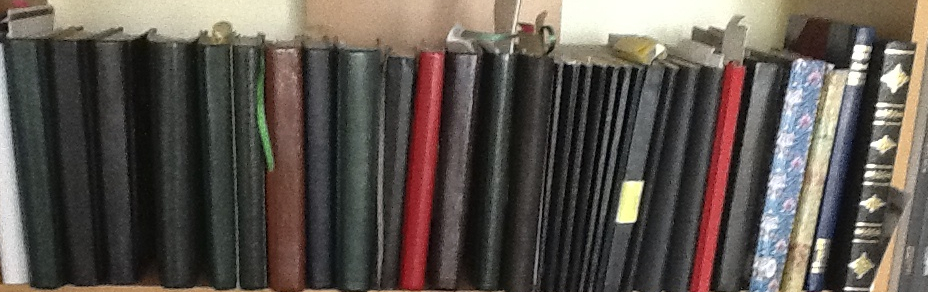
The notebook is a crucial writing tool for recording observations of place, space, research notes, all of which are fundamental to the ascetic and practical activities of any writer.
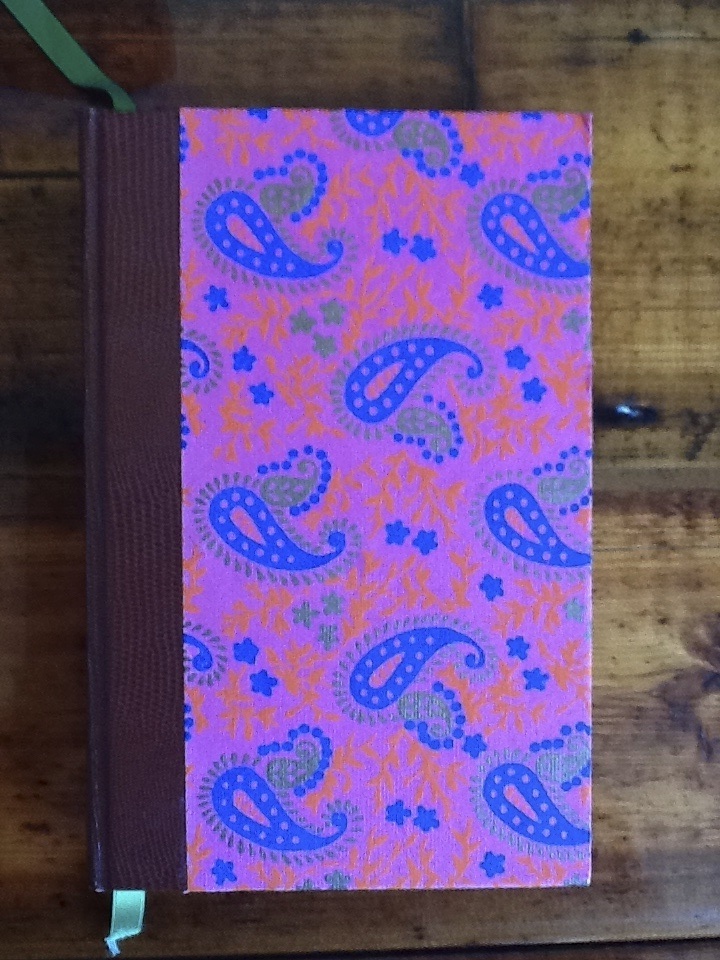
Choosing your notebook is a very individual thing and there are no real guidelines for this other than choosing one that looks and feel right for you as an individual.
Believe it or not, I feel that this is a crucial part of the process in as much as that if your notebook does not feel right for you, then there is a good chance that it will sit on the shelf and not fulfill the special role that it is intended to fill.
Some hints and ideas that will help you choose a notebook that is right for you include attention paid to the following:
Paper:
Try wherever possible to select a notebook that is made of acid free paper, as this paper will inevitably last much longer due to its proper archival quality.
Non-Acid free paper will tend to yellow and break down over the years, hence it is worth spending a little extra to get good long lasting paper on which to write.
Binding:
Always choose a notebook that is solidly bound, as one which is poorly bound will quickly fall apart when the binding breaks down. The best forms of binding are those that use the traditional sewn paper interleaving and are then glued and finished along traditional classical binding lines.
Physical Feel + Touch:
Crucial: your notebook must have a feel that is right for you otherwise you won’t use it. Feel and touch are vital ingredients to a notebook that you will use
Size:
Size is important, as you must think about the maximum size that is satisfactory for you to carry around with you. Notebooks that are too heavy, bulky or awkward will not work well for you.
Price:
Don’t spend too little or too much. Remember that once you select a type of notebook that you want to use bear in mind the repeat cost each time you buy one once your old notebook one has been filled up.
Availability:
Choose a notebook that you will be able to secure a regular supply of once you have settled on a particular type.
Ornateness:
Overly ornate notebooks will often cause you to hesitate in using them.
The notebook is to the writer what the camera is to the photographer: an essential tool of observation and recording – so never forget to keep your notebook you at all times – inspiration often strikes randomly and its vital to capture your thoughts freshly and immediately which is the great value of the notebook.
Keeping writer’s notebooks has been one of my greatest enduring pleasures. At times an almost addictive pleasure, but one which is endlessly satisfying.
 Naked Cities Journal
You must be logged in to post a comment.