Cigarette ads, a burlesque house, a struggling theater, a flea circus and freak show (likely Hubert’s Museum): If you visited 42nd Street on the west side of Broadway at Times Square in 1932, this is what you’d find. “42nd Street West of Broadway” was painted that year by Edmund Yaghjian, an Armenian immigrant who depicted […]
During one of the most colorful and flamboyant phases of his creative life, William S. Burroughs was closely associated with his New York loft apartment at 222 Bowery both affectionately and aptly known as The Bunker. The scene of many legendary parties and encounters with fellow writers, artists, hangers-on, street urchins, fans and other innumerable dramatis personae, Burroughs somewhat reluctantly at times played the mulit-faceted role of raconteur, showman, marksman, chef, host and resident celebrity that would undoubtedly help to further cement the Literary Outlaw myth so closly associated with his persona.
In this warm and intimate film portrait below of his close relationship with William S. Burroughs, fellow writer and poet John Giorno recounts the heady days of The Bunker and the antics associated with Burroughs’ famous residency. The cast of creative and literary heroes and villains ranged from the Beats Herbert Huncke and Allen Ginsberg, to such luminaries as Andy Warhol, Patti Smith,Terry Southern and Victor Bockris [who would assemble various conversational accounts of the goings-on at The Bunker under the title With William S. Burroughs: Reports from The Bunker], as well as various members of the rock and roll fraternity of royals including – Mick Jagger, David Bowie and punk icon Joe Strummer.
The term ‘The Bunker’ itself stems from the fact that the apartment had no windows as well as extremely thick concrete walls which isolated it from all outside noise. Burroughs saw this as the ideal circumstances for his writing – and indeed his marksmanship – and the building served as an extremely attractive location in which to unfold his daily creative and life rituals.
During a trip to New York in 2009-2010, I made a pilgrimage to The Bunker in search of the Burroughs mythos and the surrounding historic district of the Bowery. Indeed, the Bowery itself is known for its own colorful and unsavory history as a prominent site for men’s shelters that housed many of the cities homeless, poor and indigent residents and The Bowery Mission continues to operate until today as it has done since the 1870s just several doors away from The Bunker itself.
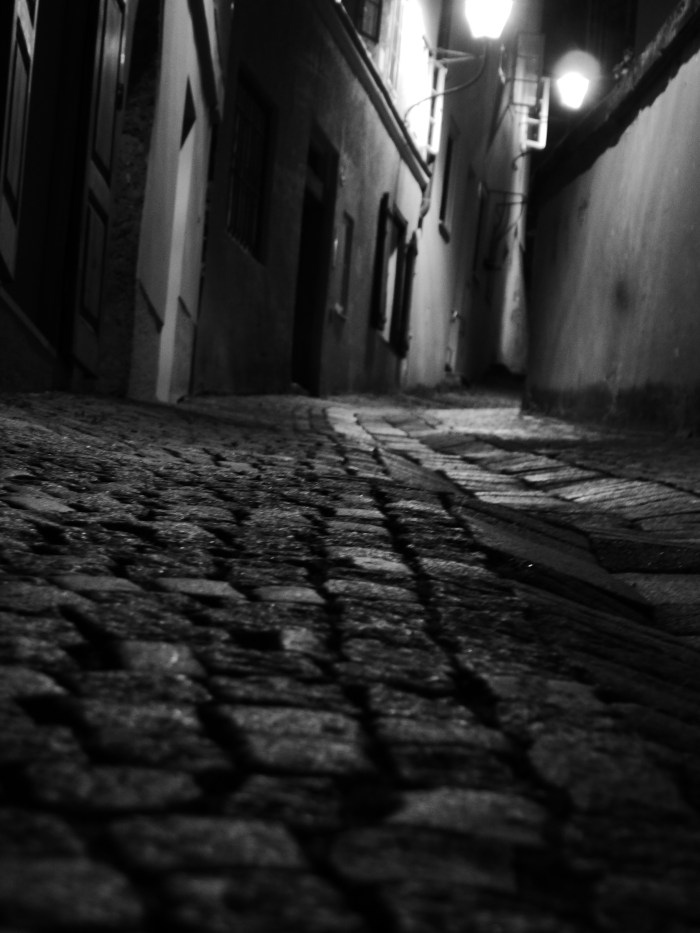
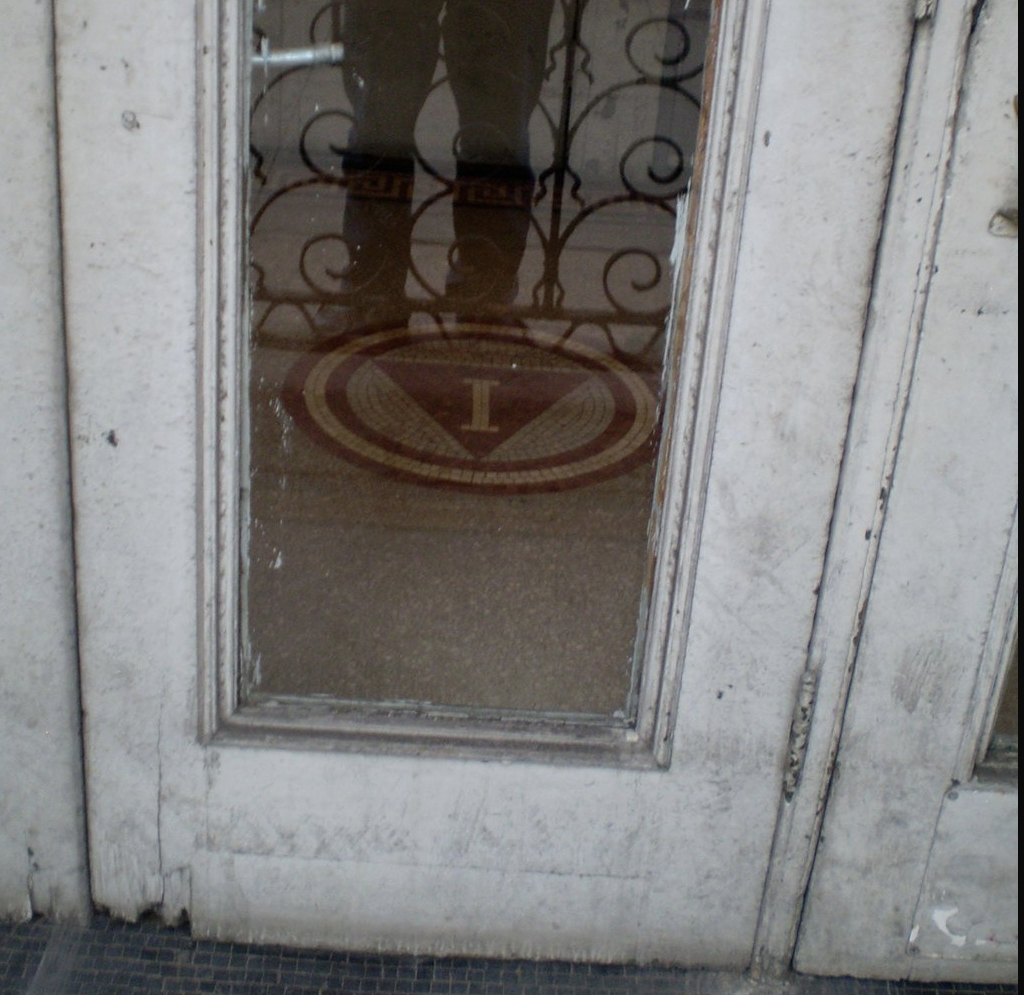
Below are some images that I took of the front entrance, the view looking up to The Bunker loft and a street view all taken on a particularity cold winter’s day. Looking closely through the wrought iron gates, it was fascinating to still see the remnants of the YMCA logo adorning the tiled floor just inside the door as the building had served as a working YMCA. Indeed, a fascinating history of the building has also been documented by the New York Times which can be found at the following link: New York Times history of 222 Bowery
Stills images copyright Marcus D. Niski 2009-2020
‘The Bunker’ undoubtedly remains an iconic and important architectural and cultural reference point to one of the great periods of New York’s 20th Century literary and cultural history. Given its proximity to CBGBs which played a seminal role in the birth of the American punk rock movement that spawned a whole generation of musicians and artists, it’s hardly surprising that a pilgrimage to The Bunker was also part of the neighborhood lore and ritual for so many of New York’s avant garde and outsider scene.
John Giorno’s (1936 – 2019) fascinating and eclectic life as a poet is also more extensively documented in the first part of the film as found on the Louisiana Channel at the following link entitled: John Giorno Interview: A Visit to the Poet
The exterior city is what unsettles you first. Streets and sidewalks are quiet, lifeless. You see other people going in and out of shops or walking the dog, yet whenever you decide to get some air, six feet away from the occasional passerby, you feel like you’re the only person in all of New York. […]
Looking up at New York’s buildings isn’t the only way to get a sense of the city’s past. Cast your eyes down on the sidewalk and street, and you’ll start seeing an incredible variety of manhole covers—many from the 19th and early 20th centuries. These iron lids serve a utilitarian purpose. But the men who […]
In March 1970, a traveler now living in Rotterdam paid a visit to New York City. Jaap Breedveld was in his 40s at the time. Like many tourists, he took photos that reflect the typical itinerary of a sightseer from overseas, like Times Square (above, with the old Howard Johnson’s at 46th Street on the […]
New York was an inexhaustible space, a labyrinth of endless steps, and no mater how far he walked, no matter how well he came to know its neighborhood and streets, it always left him with the feeling of being lost. Lost, not only in the city, but within himself as well. Each time he took a walk, he felt as though he were leaving himself behind, and giving himself up to the movement of the streets, by reducing himself to a seeing eye, he was able to escape the obligation to think, and this, more than anything else, brought him to a measure of peace, a salutary emptiness within… Motion was of the essence, the act of putting one foot in front of the other and allowing himself to follow the drift of his own body. By wandering aimlessly, all places became equal, and it no longer mattered where he was. On his best walks, he was able to feel that he was nowhere. And this, finally, was all he ever asked of things: to be nowhere. New York was the nowhere he had built around himself, and he realized that he had no intention of ever leaving it again.
Paul Auster in City of Glassas quoted in Paul Auster’s New York, Henry Hold and Company, New York)
The feeling that emerges from these glimpses of city life is roughly equivalent to what one feels when looking at a photograph. Cartier-Bresson’s “decisive moment” is perhaps the crucial idea to remember in this context. The important thing is readiness: you cannot walk out into the street with the expectation of writing a poem or taking a picture, and yet you must be prepared to do so whenever the opportunity presents itself. Because the “work” can come into being only when it has been given to you by the world, you must be constantly looking at the world.
From: The Art of Hunger, as quoted in Paul Auster’s New York, Henry Hold and Company, New York)

![Bunker[1] MN](https://nakedcitiesjournal.net/wp-content/uploads/2020/09/bunker1-mn.jpg)
![Bunker [3] MN](https://nakedcitiesjournal.net/wp-content/uploads/2020/09/bunker-3-mn.jpg)


 Naked Cities Journal
You must be logged in to post a comment.