Places

By Marcus D. Niski

From cradle to the grave we engage with places of differing kinds for differing reasons for better or for worse: places of horror and wonderment, places of joy and sorrow, places to rest, places to work, places that lift us up and places that bring us down, places of lightness and darkness: so many places inhabit our world…

                                                                                          Public Squares

Hospitals

Quadrangles

Churches


Prisons

Rooms

Universities

            Cemeteries

Hotels

Asylums

Fields

Hills

Valleys

         Dales

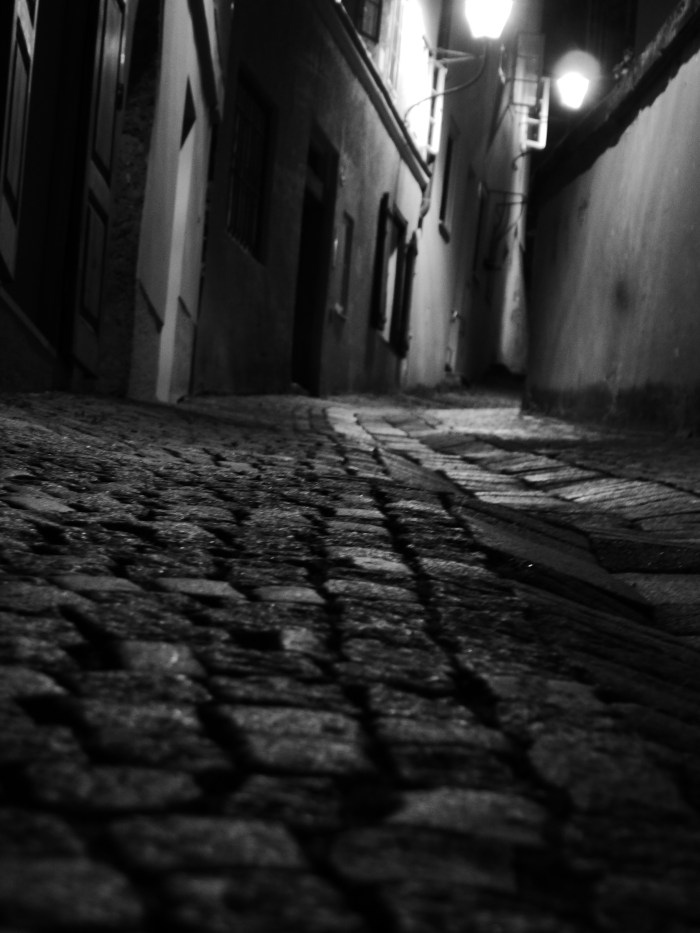
              Laneways

Fjords

            Escarpments


[MN] September, 2017

Virginia Woolf: A ‘Street Haunting’

Have you ever walked along a street and imagined the lives of the strangers that you pass?

In Virginia Woolf’s 1927 essay ‘Street Haunting’, the narrator explores this imaginative act of dipping in and out of people’s minds as they move through the city’s wintry, twilight streets. From prime ministers to the homeless, the narrator examines the city’s inhabitants and the spaces they occupy. ‘What greater delight and wonder can there be than to leave the straight lines of personality’, the narrator asks, to feel ‘that one is not tethered to a single mind, but can put on briefly for a few minutes the bodies and minds of others’.

Source: The British Library, 20th Century Literature Collection Items as found at: http://www.bl.uk/collection-items/street-haunting-an-essay-by-virginia-woolf

Writing About Place and Space

By Marcus D. Niski

One of the things that I have long been captivated by are the elements of place and space. How we ‘see’ the world around us, and how we ‘react’ to it. The pictures we create in our minds that surround our daily lives and how we interpret them. How we react to ‘mundane things’, ‘objects’ and ‘occurrences’ that shape our reality.

My thesis has long been that the increasing pace of our society puts us less in touch with the simple mundane things that are so present in our everyday reality (or should be!). Our media, entertainment, and lives in general have been ‘dumbed down’ to accommodate such rapid exponential change.

Some of the greatest writers – in my opinion – are those who are able to ‘slow us down’ to really focus in on what most people miss: detail through studied observation.

Observation is a skill that can and must be practiced in good literary writing (and in life in general): William S. Burroughs argued that the trade skills of the writer are very similar in fact to the trade skills of the detective or the spy. I think there is a very strong analogy here between the two skill sets.

– Marcus D. Niski,  September 2017
Foucault on Space

The space in which we live, which draws us out of ourselves, in which the erosion of our lives, our time and our history occurs, the space that claws and gnaws at us, is also, in itself, a heterogeneous space. In other words, we do not live in a kind of void, inside of which we could place individuals and things. We do not live inside a void that could be colored with diverse shades of light, we live inside a set of relations that delineates sites which are irreducible to one another and absolutely not superimposable on one another.

From: Michel Foucault: Of Other Spaces: Utopias and Heterotopias

Architecture /Mouvement/ Continuité , October, 1984 (“Des Espace Autres,” March 1967), 
Translated from the French by Jay Miskowiec)


Ruin — Liminal Narratives

Ruins pose a constant negotiation between glory and dissolution; success and failure; substance and nothingness. They ’embody a set of temporal and historical paradoxes’ (Dillon, p.11). The abandoned warehouse or the tumbledown barn reveal a memory of the past and simultaneously a projection of our own futures. In the medieval motif of The four living […]

via Ruin — Liminal Narratives

Describe your street. Describe another street. Compare.

Georges Perec ‘Approaches to What?’ in Species of Space and Other Pieces

What can we know of the world? What quantity of space can our eyes hope to take in between our birth and our death? How many square centimeters of planet earth will the soles of our shoes have touched?

George Perec in Species of Spaces and Other Pieces