I write, I extend my hand; without my knowing it, this is already a prayer, I extend my hand to you so that you will exist because you do exist, beyond my fingers, your fingers, without my knowing it this is already a response, already I draw to my side the site for you, with […]
But there is also another sense in which seeing comes before words. It is seeing which establishes our place in the surrounding world; we explain that world with words, but words can never undo the fact that we are surrounded by it. The relation between what we see and what we know is never settled.
– John Berger in Ways of Seeing
A Walk Along Library Way — Finding NYC

Pedestrians traveling 41st Street in Manhattan between Fifth Avenue and Park Avenue may notice special street signs if they pay close attention – that two-block stretch is known as Library Way. Embedded within the sidewalk at regular intervals you will find 96 unique bronze plaques. The plaques were designed by sculptor Gregg LeFevre, and each […]
The fabulous Library Way walking trail I fondly remember following along during a cold New York winter in 2010 as found at: A Walk Along Library Way — Finding NYC
Benjamin’s Parisian Passages

I have a distant recollection of walking all the way from the Gare du Nord to lunch in the Café Marly by way of the nineteenth-century arcades so beloved of Walter Benjamin. I tried to reconstruct this journey in reverse, starting in the Galerie Vivienne not far from Adrien Gardère’s office:-
A fabulous piece of flânerie and visual tour of Benjamin’s Passages by Charles Robert Saumarez Smith via Passages — | Charles | Saumarez | Smith |
” …
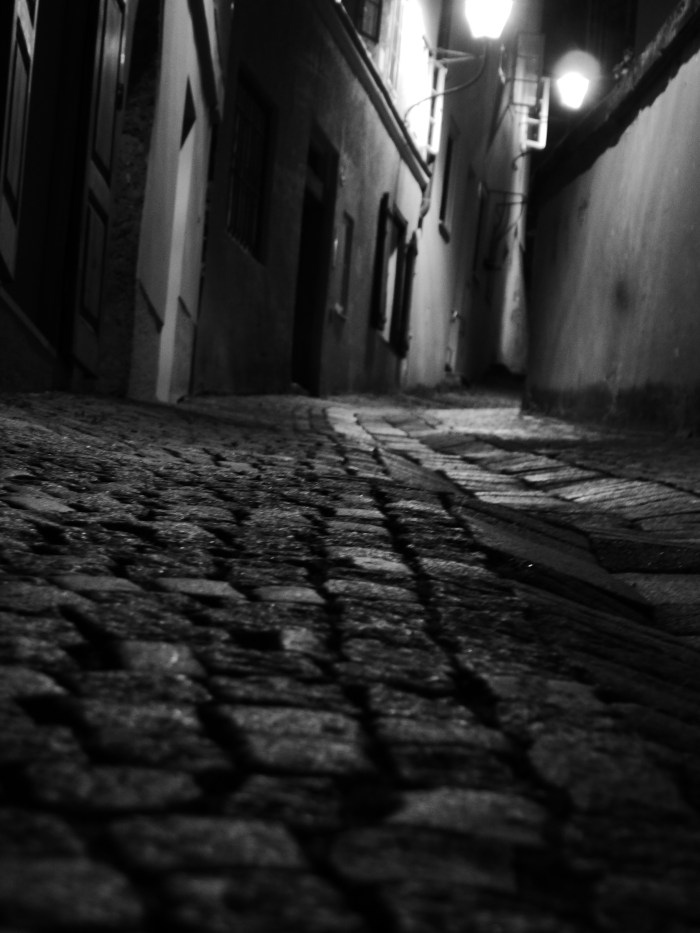
The Arcades book [Das Passagen-Werk] was never intended to be an economic history (though part of its ambition was to act as a corrective to the entire discipline of economic history). An early sketch suggests something far more like his autobiographical work, A Berlin Childhood [:] “One knew of places in ancient Greece where the way led down into the underworld. Our waking existence likewise is a land which, at certain hidden points, leads down into the underworld – a land full of inconspicuous places from which dreams arise. All day long, suspecting nothing, we pass them by, but no sooner has sleep come than we are groping our way back to lose ourselves in the dark corridors. By day, the labyrinth of urban dwelling resembles consciousness; the arcades… issue unremarked on to the streets. At night, however, under the tenebrous mass of the houses, their denser darkness protrudes like a threat, and the nocturnal pedestrian hurries past – unless, that is, we have emboldened him to turn into a narrow lane.”
Two books served Benjamin as models: Louis Aragon’s A Paris Peasant, with its affectionate tribute to the Passage de L’Opéra, and Franz Hessel’s Strolling in Berlin, which focuses on the Kaisergalerie and its power to summon up the feel of a bygone era. In his book, Benjamin would try to capture the “phantasmagoric” experience of the Parisian wandering among displays of goods, an experience still recoverable in his own day, when “arcades dot the metropolitan landscape like caves containing the fossil remains of a vanished monster: the consumer of the pre-imperial era of capitalism, the last dinosaur of Europe”.
… “
An extract from JM Coetzee’s highly engaging essay on Walter Benjamin: ‘The man who went shopping for truth’ as found at:
https://www.theguardian.com/books/2001/jan/20/history.society as accessed 30 September 2017-09-30
Given enough Coffee…

“Given enough coffee I could rule the world” Terry Pratchett, writer
via “Given enough coffee I could rule the world” — Art of Quotation
Georges Perec and Blaise Cendrars shared two remarkable qualities: an infinite ability to acutely observe the human condition and an infinite ability to document it.
– Marcus D. Niski
Further reading:
Blaise Cendrars: A Poet for the Twenty-First Century by Yannis Livadas as found at: http://hyperallergic.com/382414/blaise-cendrars-a-poet-for-the-twenty-first-century/
Avoided: On Georges Perec by Eric Beck Rubin as found at: https://lareviewofbooks.org/article/avoided-georges-perec/
Learning to see, feel and think are the highest possible ideals in life. Depth is everything.
– Marcus D. Niski
Poetry in a City
City – the word evokes such dichotomous imagery. As I savour the languorous beauty of William Dalrymple’s City of Djinns, the words speak to me and I learn to see through new perspectives, the city I live in. Feeling every bit the outsider, adjusting to the linguistic differences, the charms of this city have begun to work on me […]
by Nirupama via http://themadrasponnu.wordpress.com/2017/04/18/poetry-in-a-city/
Banal places are always the best places/spaces in which to write.
– Marcus D. Niski
 Naked Cities Journal
You must be logged in to post a comment.