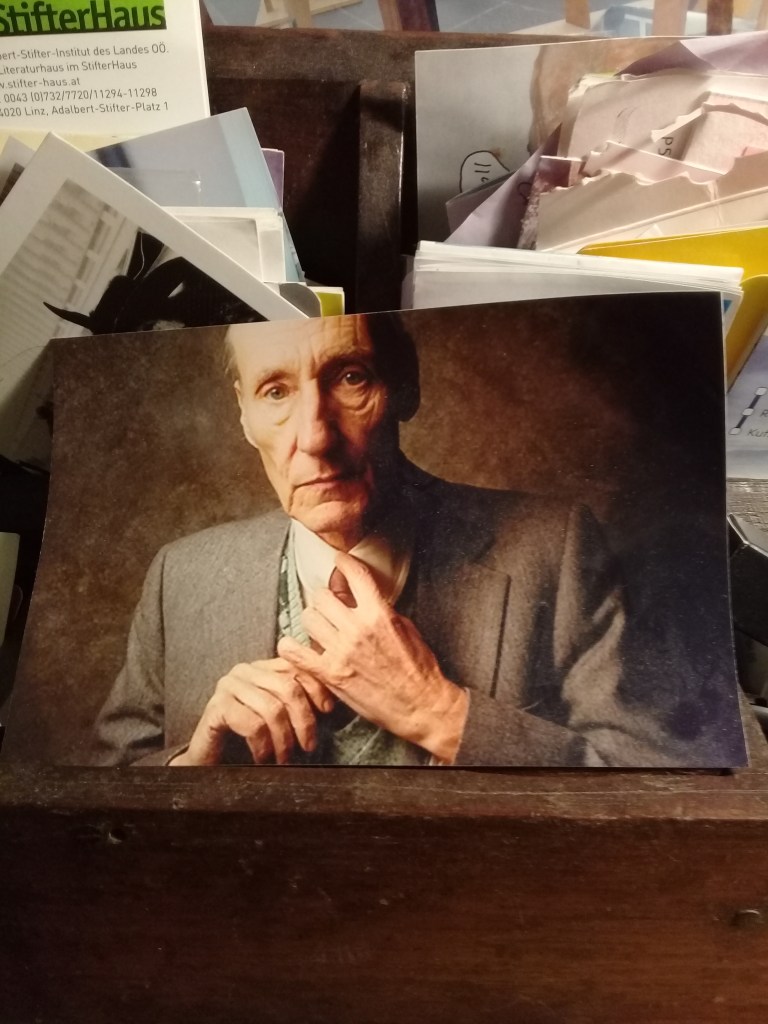
Image © Marcus D. Niski 2018
A collection of writings about place space writing and art …
Image © Marcus D. Niski 2018
by Marcus D. Niski
During one of the most colorful and flamboyant phases of his creative life, William S. Burroughs was closely associated with his New York loft apartment at 222 Bowery both affectionately and aptly known as The Bunker. The scene of many legendary parties and encounters with fellow writers, artists, hangers-on, street urchins, fans and other innumerable dramatis personae, Burroughs somewhat reluctantly at times played the mulit-faceted role of raconteur, showman, marksman, chef, host and resident celebrity that would undoubtedly help to further cement the Literary Outlaw myth so closly associated with his persona.
In this warm and intimate film portrait below of his close relationship with William S. Burroughs, fellow writer and poet John Giorno recounts the heady days of The Bunker and the antics associated with Burroughs’ famous residency. The cast of creative and literary heroes and villains ranged from the Beats Herbert Huncke and Allen Ginsberg, to such luminaries as Andy Warhol, Patti Smith, Terry Southern and Victor Bockris [who would assemble various conversational accounts of the goings-on at The Bunker under the title With William S. Burroughs: Reports from The Bunker], as well as various members of the rock and roll fraternity of royals including – Mick Jagger, David Bowie and punk icon Joe Strummer.
The term ‘The Bunker’ itself stems from the fact that the apartment had no windows as well as extremely thick concrete walls which isolated it from all outside noise. Burroughs saw this as the ideal circumstances for his writing – and indeed his marksmanship – and the building served as an extremely attractive location in which to unfold his daily creative and life rituals.
During a trip to New York in 2009-2010, I made a pilgrimage to The Bunker in search of the Burroughs mythos and the surrounding historic district of the Bowery. Indeed, the Bowery itself is known for its own colorful and unsavory history as a prominent site for men’s shelters that housed many of the cities homeless, poor and indigent residents and The Bowery Mission continues to operate until today as it has done since the 1870s just several doors away from The Bunker itself.
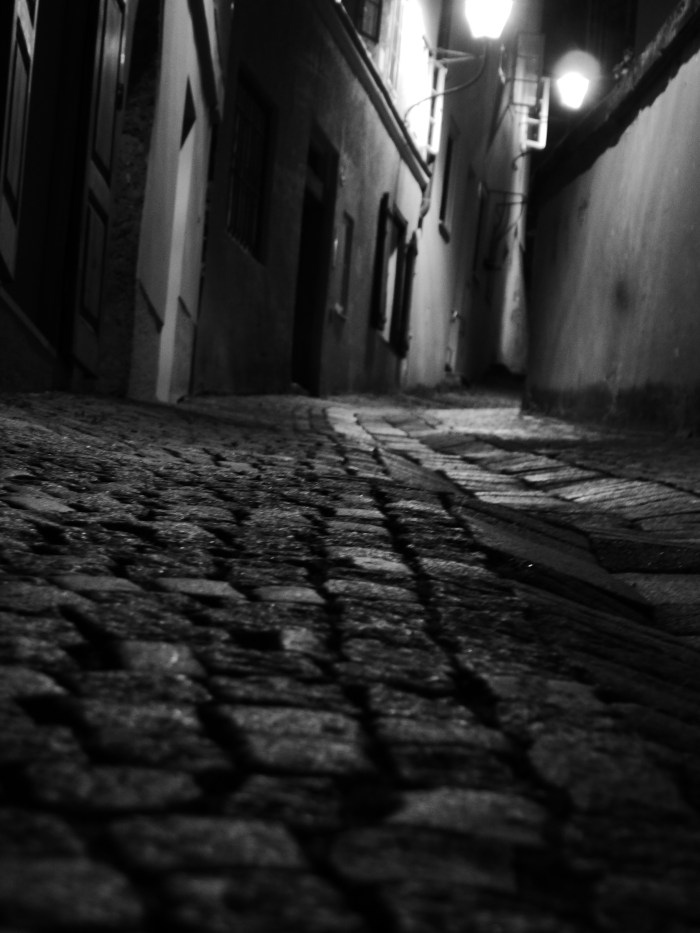
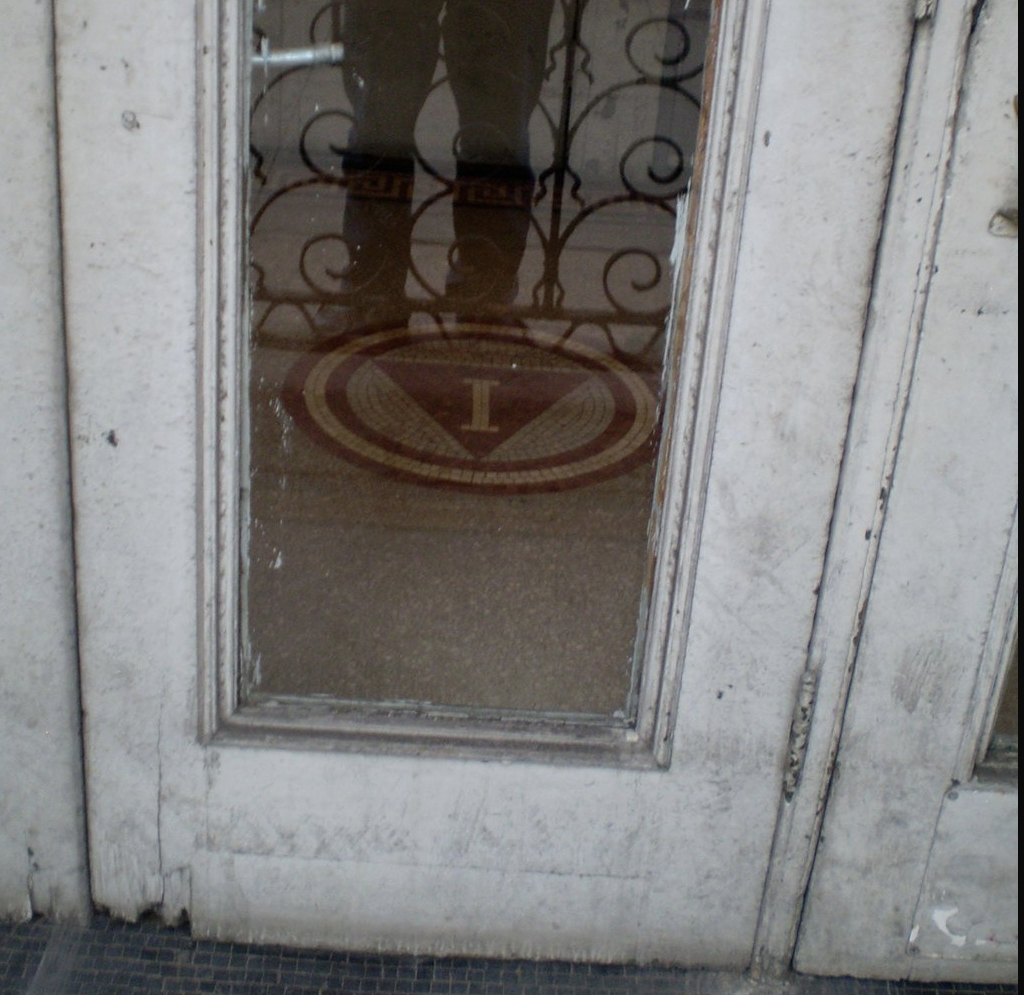
Below are some images that I took of the front entrance, the view looking up to The Bunker loft and a street view all taken on a particularity cold winter’s day. Looking closely through the wrought iron gates, it was fascinating to still see the remnants of the YMCA logo adorning the tiled floor just inside the door as the building had served as a working YMCA. Indeed, a fascinating history of the building has also been documented by the New York Times which can be found at the following link: New York Times history of 222 Bowery
![Bunker[1] MN](https://nakedcitiesjournal.net/wp-content/uploads/2020/09/bunker1-mn.jpg)
![Bunker [3] MN](https://nakedcitiesjournal.net/wp-content/uploads/2020/09/bunker-3-mn.jpg)
Stills images copyright Marcus D. Niski 2009-2020
‘The Bunker’ undoubtedly remains an iconic and important architectural and cultural reference point to one of the great periods of New York’s 20th Century literary and cultural history. Given its proximity to CBGBs which played a seminal role in the birth of the American punk rock movement that spawned a whole generation of musicians and artists, it’s hardly surprising that a pilgrimage to The Bunker was also part of the neighborhood lore and ritual for so many of New York’s avant garde and outsider scene.
John Giorno’s (1936 – 2019) fascinating and eclectic life as a poet is also more extensively documented in the first part of the film as found on the Louisiana Channel at the following link entitled: John Giorno Interview: A Visit to the Poet
The light of memory, or rather the light that memory lends to things, is the palest light of all…I am not quite sure whether I am dreaming or remembering, whether I have lived my life or dreamed it. Just as dreams do, memory makes me profoundly aware of the unreality, the evanescence of the world, […]
Eugène Ionesco — The Vale of Soul-Making

A passport, with all of its stamps and visas, can reveal quite a bit about the bearer. How many travelers have played the where have you been game by passing passports around a train compartment or a hostel common room ? Imagine what we could discover from the passports of our great writers. Here are […]
Literary Passports — Travel Between The Pages
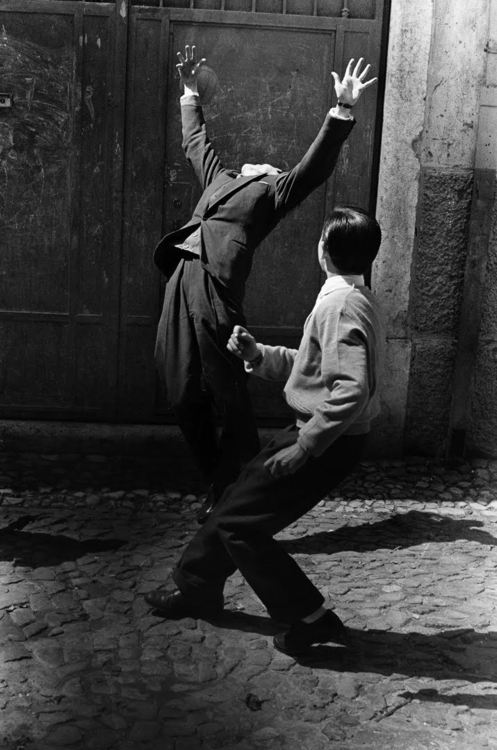
Loneliness isn’t limited to being alone. It transcends to a form where even though you are surrounded by everyone you want to be surrounded by, you still feel utterly alone. Loneliness is not the physical manifestations of people but the mental manifestation of us in their minds. If we are not in their minds when […]
[78] Defeat. — Smoke Words Every Day

On this day in 1892, German philosopher Walter Benjamin was born, a man of words whose life was devoted to writing and philosophy after being rejected by the German Army due to incompetence. Best known for his essay writing and literary criticism, he was a translator of French authors such as Charles Baudelaire and Marcel […]
Créditos: https://circulodepoesia.com/2013/09/el-pensamiento-de-walter-benjamin/
Birth of Walter Benjamin — Trあnslator’s magazine

Happy birthday, Georges Perec! Here are some quotes from his writing:
“Space is a doubt…” “Why not set a higher value on dispersal?” “I write: I write… I write: ‘I write…’ I write that I write… Etc.” “To write: to try meticulously to retain something, to cause something to survive; […]
Georges Perec on Writing, Space, the Uninhabitable, and More. — BIG OTHER

Photo by Martine Franck/Magnum Photos ‘Our society is one not of spectacle, but of surveillance; under the surface of images, one invests bodies in depth; behind the great abstraction of exchange, there continues the meticulous, concrete training of useful forces; the circuits of communication are the supports of an accumulation and a centralization of knowledge; […]
Michel Foucault — microprose
Le plaisir littéraire n’est pas d’exprimer sa pensée tant que de trouver ce qu’on n’attendait pas de soi.
Literary pleasure is not to express one’s thought as long as to find what was not expected of oneself.
– Paul Valéry, Cahiers (Poétique, 1917-1918)
Barthes’ “The Death of the Author” is comprised of several short self-contained arguments explaining why the author is no longer an important part of literature. Quite possibly the weakest of his arguments is the one that states that the author is not important because he or she does not write him or herself into the […]
 Naked Cities Journal
You must be logged in to post a comment.