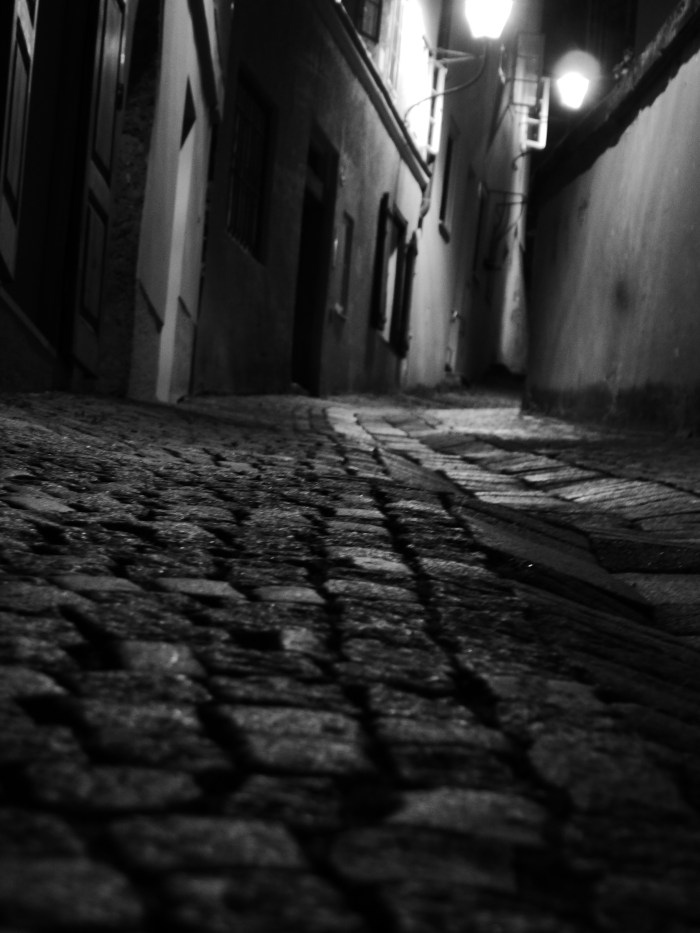
Paul Auster’s New York

The feeling that emerges from these glimpses of city life is roughly equivalent to what one feels when looking at a photograph. Cartier-Bresson’s “decisive moment” is perhaps the crucial idea to remember in this context. The important thing is readiness:  you cannot walk out into the street with the expectation of writing a poem or taking a picture, and yet you must be prepared to do so whenever the opportunity presents itself. Because the “work” can come into being only when it has been given to you by the world, you must be constantly looking at the world.

From: The Art of Hunger, as quoted in Paul Auster’s New York, Henry Hold and Company, New York)

“I am not sure that I exist, actually. I am all the writers that I have read, all the people that I have met, all the women that I have loved; all the cities I have visited” — Art of Quotation

“I am not sure that I exist, actually. I am all the writers that I have read, all the people that I have met, all the women that I have loved; all the cities I have visited”

– Jorge Luis Borges, writer

via “I am not sure that I exist, actually. I am all the writers that I have read, all the people that I have met, all the women that I have loved; all the cities I have visited” — Art of Quotation

Louis-François Delisse – Qui a dit que je ne reverrais plus… — BEAUTY WILL SAVE THE WORLD

Qui a dit que je ne reverrais plus jamais l’os d’or du soleil rouler dans nos têtes qu’entre mes mains ne pendrait plus la caresse jaune que ta langue ne serait plus jamais ma rame ? le chat soyeux du soir pose ses trois pattes sur l’œil de l’horizon et derrière les croupes et les […]

via Louis-François Delisse – Qui a dit que je ne reverrais plus… — BEAUTY WILL SAVE THE WORLD

Yūko Tsushima — the [blank] garden

Yūko Tsushima (pen name of Satoko Tsushima, 30 March 1947 – 18 February 2016) was a Japanese writer. Her father, the writer Osamu Dazai, committed suicide together with his lover, when Tsushima was one year old, and she was raised by her mother. Tsushima began her literary career by contributing to the private literary magazine Bungei shuto, and published her first stories […]

via Yūko Tsushima — the [blank] garden

The Domestication of the Garage – J.B Jackson

Wherever we go, whatever the nature of our work, we adorn the face of the earth with a living design which changes and is eventually replaced by that of a future generation. How can one tire of looking at this variety, or of marveling at the forces within man and nature that brought it about?

The city is an essential part of this shifting and growing design, but only a part of it. Beyond the last street light, out where the familiar asphalt ends, a whole country waits to be discovered: villages, farmsteads and highways, half-hidden valleys of irrigated gardens, and wide landscapes reaching to the horizon. A rich and beautiful book is always open before us. We have but to learn to read it. *

* J.B. Jackson, “The Need of Being Versed in Country Things,” Landscape, vol. 1, no. 1 (Spring 1951) as quoted in Paul Groth and Chris Wilson, “The Polyphony of Cultural Landscape Study: An Introduction,” in Everyday America, 9. The essay borrows its title from a 1920 poem by Robert Frost. 

J.B. Jackson’s 1976 essay on the evolution of the American garage displays his rare ability to combine deep erudition with eloquent and plainspoken analysis.

Read on Places Journal

Citation: “The Domestication of the Garage,”: Introduction by Jeffrey Kastner. Archival text by J.B. Jackson, “The Domestication of the Garage,” Places Journal, February 2019. Accessed 07 Feb 2019.    https://placesjournal.org/article/j-b-jackson-the-domestication-of-the-garage/