Learning to see, feel and think are the highest possible ideals in life. Depth is everything.
– Marcus D. Niski
A collection of writings about place space writing and art …
Learning to see, feel and think are the highest possible ideals in life. Depth is everything.
– Marcus D. Niski
City – the word evokes such dichotomous imagery. As I savour the languorous beauty of William Dalrymple’s City of Djinns, the words speak to me and I learn to see through new perspectives, the city I live in. Feeling every bit the outsider, adjusting to the linguistic differences, the charms of this city have begun to work on me […]
by Nirupama via http://themadrasponnu.wordpress.com/2017/04/18/poetry-in-a-city/
Banal places are always the best places/spaces in which to write.
– Marcus D. Niski

Langston Hughes’ autobiography from the years 1931 through New Year’s Day 1938 covers his early years as a professional writer during the Great Depression, in which he travels extensively and observes practices and politics as well as the status of black people throughout the world.
“Most of my life from childhood on has been spent moving, traveling, changing places, knowing people in one school, in one town or in one group, or on one ship a little while, but soon never seeing most of them again,” Langston Hughes writes …
via Hughes’ I Wonder As I Wander: Reveries of an Itinerant Poet — Carra Lucia Books

Where am I? An 8×10 square room with a feeling of no air. White walls with dirt marks caused by the edge of my dirty feet mirroring an eeriness inside my mind. The bright white light blinds me for a millisecond and then I see again. A table of inferior quality stands on its four […]
via [66] Writing Exercise: “In A Regretful Room” — Smoke words every day.
Sometimes you see a picture and you can tell that something’s missing, but you don’t know what it is …
Or you could try to fill the emptiness with something you love, as I love Walker Percy’s renderings in The Moviegoer:
The street looks tremendous. People on the far side seem tiny and archaic, dwarfed by the great sky and the windy clouds like pedestrians in old prints.
…
By Marcus D. Niski
From cradle to the grave we engage with places of differing kinds for differing reasons for better or for worse: places of horror and wonderment, places of joy and sorrow, places to rest, places to work, places that lift us up and places that bring us down, places of lightness and darkness: so many places inhabit our world…
Public Squares
Hospitals
Quadrangles
Churches
Prisons
Rooms
Universities
Cemeteries
Hotels
Asylums
Fields
Hills
Valleys
Dales
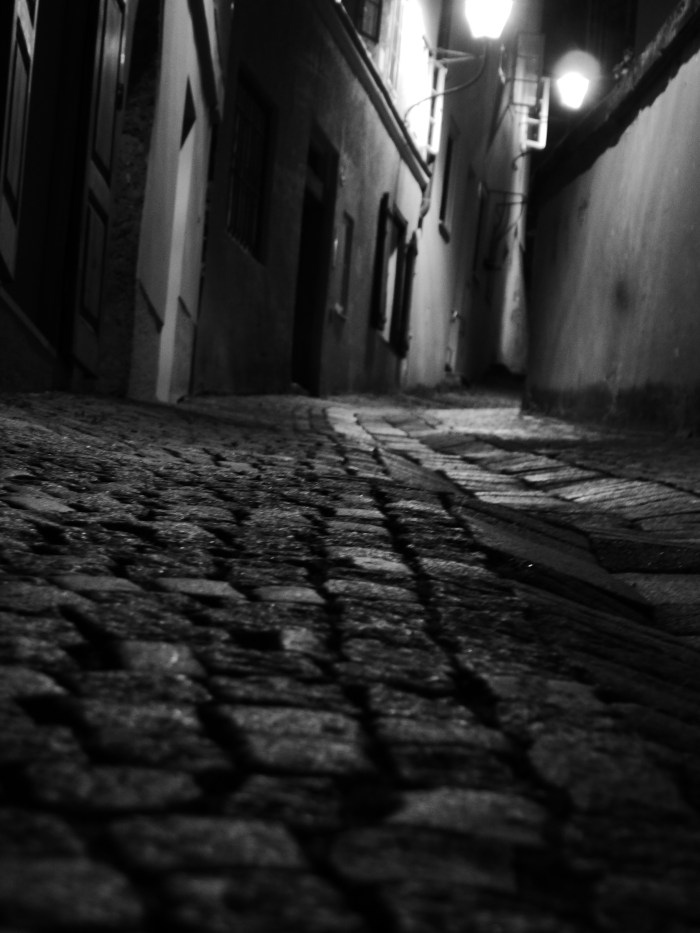
Laneways
Fjords
Escarpments
[MN] September, 2017
Beyond my anxiety, beyond this writing, the universe waits, inexhaustible, inviting.
― Jorge Luis Borges, A Personal Anthology. (Grove Press, January 14, 1994) Originally published 1961.
By Marcus D. Niski
In a dilapidated hotel famously dubbed The Beat Hotel by its colourfully eccentric inhabitants, a coalescence of some of the Beat generation’s most important protagonists came together under one roof to push forward the frontiers of literature, painting and psychic awareness.
In an extraordinary outburst of creative energy, Gregory Corso wrote some of his most important poetry there, Brion Gysin and Ian Sommerville devised The Dreamachine , Allen Ginsberg worked on Kaddish (dwelling in Room 25), Burroughs and Gysin experimented with the ‘cut-ups’ and Sinclair Beiles – amongst many others who came and went – co-authored Minutes to Go with Burroughs and Gysin amidst a burlesque carnival of creative chaos.
Always seeking new paths of creative inspiration, Burroughs also devised a fascinating observational technique known as ‘taking the colour walk’:
“I was taking a colour walk around Paris the other day … I was walking down the boulevard when I suddenly felt this cool wind on a warm day, and when I looked out I was seeing all the blues in the street in front of me… blue on a foulard…a girls’ blue sweater…blue neon…the blue sky …all the blues. When I looked again, I saw nothing but all the reds…of traffic lights…car lights…a café sign…a man’s nose…”
Excerpt from The Beat Hotel, Barry Miles, Atlantic Books, London, 2000, p 157.
Located at 9, rue Git-le-Coeur and curated under Madame Rachou’s ever watchful eye (circa 1957-1963), The Beat Hotel was undoubtedly one of the great oasis’ of Parisian creativity at that time. Indeed, in this extraordinary interview below, Sinclair Beiles recalls some of the legendary ‘eccentricities’, excesses and antics that took place amidst the dilapidated digs of The Beat Hotel –
More biographical information about Sinclair Beiles – one of the Beat generation’s most neglected, if not tragically overlooked protagonists – can also be found at:
http://www.emptymirrorbooks.com/beat/sinclair-beiles-a-man-apart/
– Marcus D. Niski, September 2017
A wonderfully atmospheric short documentary on legendary The Beat Hotel by Riccardo Cremon.
 Naked Cities Journal
You must be logged in to post a comment.