“You must set about it more slowly, almost stupidly. Force yourself to write down what is of no interest, what is most obvious, most common, most colourless…”
– Georges Perec in Species of Space and Other Pieces
A collection of writings about place space writing and art …
“You must set about it more slowly, almost stupidly. Force yourself to write down what is of no interest, what is most obvious, most common, most colourless…”
– Georges Perec in Species of Space and Other Pieces
Nothing exists until or unless it is observed. An artist is making something exist by observing it. And his hope for other people is that they will also make it exist by observing it. I call it ‘creative observation.’ Creative viewing.
– William S. Burroughs
Have you ever walked along a street and imagined the lives of the strangers that you pass?
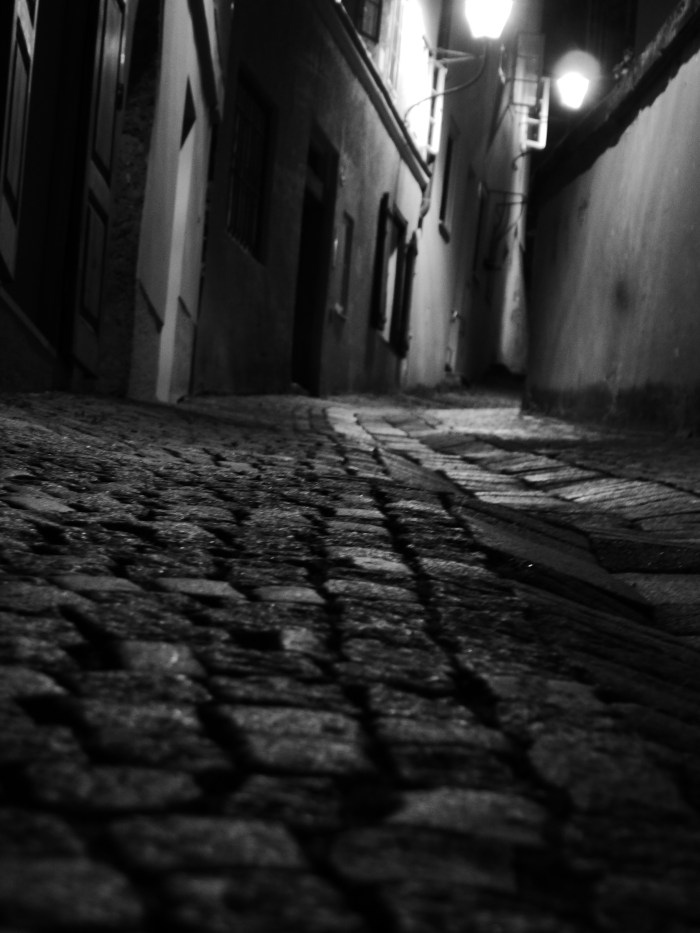
In Virginia Woolf’s 1927 essay ‘Street Haunting’, the narrator explores this imaginative act of dipping in and out of people’s minds as they move through the city’s wintry, twilight streets. From prime ministers to the homeless, the narrator examines the city’s inhabitants and the spaces they occupy. ‘What greater delight and wonder can there be than to leave the straight lines of personality’, the narrator asks, to feel ‘that one is not tethered to a single mind, but can put on briefly for a few minutes the bodies and minds of others’.
Source: The British Library, 20th Century Literature Collection Items as found at: http://www.bl.uk/collection-items/street-haunting-an-essay-by-virginia-woolf
By Marcus D. Niski
One of the things that I have long been captivated by are the elements of place and space. How we ‘see’ the world around us, and how we ‘react’ to it. The pictures we create in our minds that surround our daily lives and how we interpret them. How we react to ‘mundane things’, ‘objects’ and ‘occurrences’ that shape our reality.
My thesis has long been that the increasing pace of our society puts us less in touch with the simple mundane things that are so present in our everyday reality (or should be!). Our media, entertainment, and lives in general have been ‘dumbed down’ to accommodate such rapid exponential change.
Some of the greatest writers – in my opinion – are those who are able to ‘slow us down’ to really focus in on what most people miss: detail through studied observation.
Observation is a skill that can and must be practiced in good literary writing (and in life in general): William S. Burroughs argued that the trade skills of the writer are very similar in fact to the trade skills of the detective or the spy. I think there is a very strong analogy here between the two skill sets.
– Marcus D. Niski, September 2017
1. Knowing
2. Seeing
3. Observing
4. Feeling
5. Smelling
6. Sensing
7. Encountering
8. Absorbing
9. Engaging
10. Living
– Marcus D. Niski, 24 April 2017
Space – what is it?
Space – where is it?
Space – How do we understand it?
– Marcus D. Niski
‘Think/classify’ …
– Georges Perec, in Species of Spaces and Other Pieces
What is important, it seems to me, is not so much to defend a culture whose existence has never kept a man from going hungry, as to extract, from what is called culture, ideas whose compelling force is identical to that of hunger.
– Antonin Artaud
[As quoted in Paul Auster’s The Art of Hunger, Sun & Moon Press, Los Angeles, 1992]
Placid small thought no 2
The passage of time (my History) leaves behind a residue that accumulates: photographs, drawings, the corpses of long since dried up felt pens, shirts, non-returnable glasses and returnable glasses, cigar wrappers, tins, erasers, postcards, books, dust and knickknacks: this is what I call my fortune.
–Georges Perec, Species of Spaces and Other Pieces
“In writing, the point is not to manifest or exalt the act of writing, nor is it to pin a subject within language; it is, rather, a question of creating a space into which the writing subject constantly disappears.”
― Michel Foucault
 Naked Cities Journal
You must be logged in to post a comment.