The space in which we live, which draws us out of ourselves, in which the erosion of our lives, our time and our history occurs, the space that claws and gnaws at us, is also, in itself, a heterogeneous space. In other words, we do not live in a kind of void, inside of which we could place individuals and things. We do not live inside a void that could be colored with diverse shades of light, we live inside a set of relations that delineates sites which are irreducible to one another and absolutely not superimposable on one another.
From: Michel Foucault: Of Other Spaces: Utopias and Heterotopias
Architecture /Mouvement/ Continuité , October, 1984 (“Des Espace Autres,” March 1967), Translated from the French by Jay Miskowiec)
My love of keeping writer’s notebooks as both a practical endeavour and aesthetic pursuit features heavily here, as does a range of information and insights as to how to get started with keeping your writer’s notebooks and how to maintain the habit as a regular ritual.
Our writing heroes and icons shape our thinking and provide a wellspring of imagination, insight and motivation. In celebrating them, we continue to push forward with our own insights as well as attempt to spur ourselves on towards new heights of discovery.
The pursuit of ‘writing for writing’s’ sake’ – most particularly in my notebooks – has provided me a lifetime of pleasure in absorbing and reflecting upon the world around me. I hope this site will inspire you and similarly urge you to explore the maximum depth of your creativity in whatever field of writing that you engage in.
– Marcus D. Niski, September 2017
Posted on
What is a writer actually doing? I put forward as a general proposition that any artist – and I include all creative thinkers – they are trying to make the viewer, the reader, the student aware of what he knows and doesn’t know that he knows.
– William S. Burroughs
Extracted from: The William S. Burroughs Workshop – Jack Kerouac Conference, Naropa University, Bolder Colorado, July 23, 1982 – as Transcribed from the Original Audio Recording by Marcus D. Niski as found at https://archive.org/details/WilliamS.BurroughsOnWriting
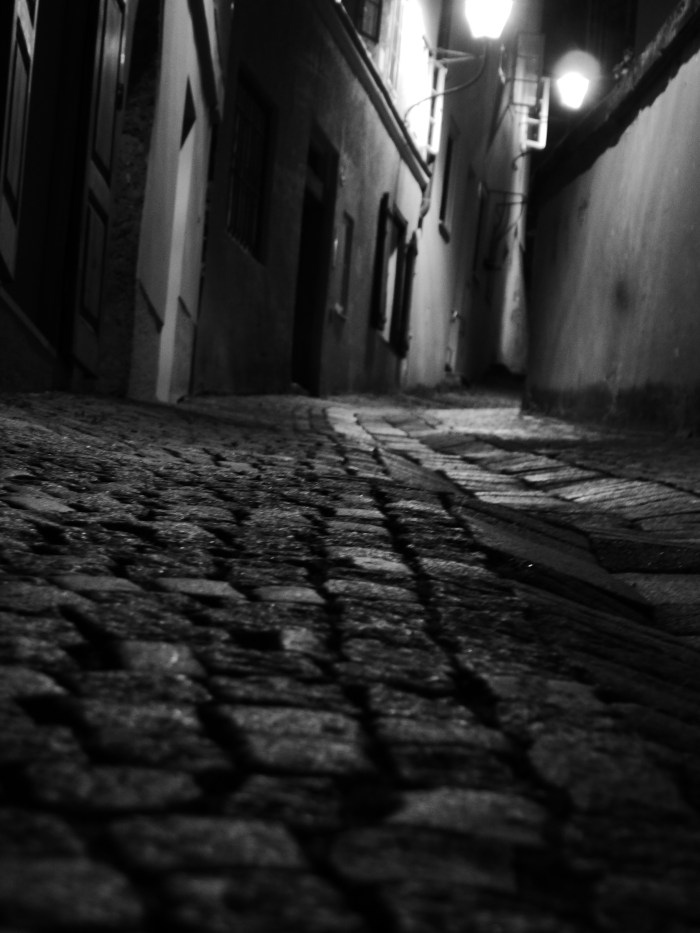
The flâneur – or the notion of the flâneur – is a creation of the nineteenth century Parisian streets. The flâneur is, by definition, an ‘exemplary stroller’ who strolls though the streets at a pace at which observation becomes the centrepoint of his or her experience.
As Edmund White suggests in his stunningly observant account of the flâneur and the ‘paradoxes of Paris’ *, Walter Benjamin was probably one of the most acute observers of the idea of the flâneur and one of literature’s most important writers in documenting the activities of this unique Parisian creature.
For Benjamin, the flâneur ultimately, is –
“… In search of experience, not knowledge…’ [Edmund White, p47]
The flâneur is also by definition not a tourist or pedestrian eager to rapidly ‘consume’ the landscape, but one who is almost overwhelmed by the delectable possibilities of the urban landscape; so much so that he or she is not really sure where to start or where the journey will take them.
Ruins pose a constant negotiation between glory and dissolution; success and failure; substance and nothingness. They ’embody a set of temporal and historical paradoxes’ (Dillon, p.11). The abandoned warehouse or the tumbledown barn reveal a memory of the past and simultaneously a projection of our own futures. In the medieval motif of The four living […]
… In the streets of Paris, Benjamin earned a living as a journalist while hunting out concrete examples on which to field test and then synthesize cutting-edge social theories. Encouraged by fellow German expatriate author Franz Hessel, he learned how to wander Paris with a voyeuristic curiosity modeled on that of the flaneur — a detached, attentive spectator who believed in the “religious intoxication of great cities” — who passed through every line of Charles Baudelaire’s poetry, especially the groundbreaking volume Les Fleurs du Mal (1857).
Describe your street. Describe another street. Compare.
– Georges Perec ‘Approaches to What?’ in Species of Space and Other Pieces
Posted on
What can we know of the world? What quantity of space can our eyes hope to take in between our birth and our death? How many square centimeters of planet earth will the soles of our shoes have touched?
– George Perec in Species of Spaces and Other Pieces
An Automat, Mr. [Neil] Simon wrote in New York magazine, was “a large, rectangular hall, filled with shiny, lacquered tables surrounding a glass booth, where the nimblest fingers on earth dispensed change for a quarter or a dollar in nickels . . . endless nickels, shiny nickels, magical nickels that were slipped into slots on the wall, and before your very eyes, an Open Sesame roll came around the bend of a glass cubicle.”
The Automat has an unlikely place in the pantheon of American Literary History. At once a place of simplicity, convenience and stark utilitarian dining, the Automat chains of New York City – dominated by Horn & Hardart and Bickfords – became the meeting places of some of America’s most famous and infamous literary figures. As legend would have it, a cavalcade of some of America’s most important writers, artists and playwrights would grace the shores of the humble Automats most notably Bickfords located on West 42 Street where Beat luminary Herbert Huncke was said to be almost an permanent fixture. [1]
From William S. Burroughs and Jack Kerouac, to Woody Allen, Neil Simon, Patti Smith – amongst countless legions of other lesser well-known writers, artists and intellectuals – many notable New York City writers are said to have imbibed in, and in many instances, immortalized the humble Automat in their novels, short stories, plays, and films. Indeed, the Automat seemed like a writer’s domiciliary dream come true: what was there not to like about Automats given the perfect combination of enticements for any malnourished, impecunious writer or artist – cheap food (relatively), 24 hour convenience, winter warmth, and the company of like-minded eccentric souls. Accordingly, playwright Neil Simon is said to have proudly declared: “The Automat! The Maxim’s of the disenfranchised”.
The most potent “secret weapon” of the Automat was undoubtedly, as Bill Demain writes, the freshly brewed coffee [!] :
For all the good food, the Automat’s real secret weapon was its coffee. Horn & Hardart popularized fresh drip-brewed coffee in New York. Prior to the Automat, coffee was often harsh and bitter, boiled and clarified with eggshells. The Automat’s smooth aromatic brew flowed regally from ornate brass spigots in the shape of dolphin heads. In their heyday, Automats sold over 90 million cups of their fresh-brewed coffee each year. And they were committed to keeping it fresh. When an Automat employee brewed coffee, they filled out a time card. After twenty minutes, they discarded whatever coffee was left and made a fresh pot. If there was any doubt about Horn & Hardart’s commitment to java, the Automat even adopted Irving Berlin’s “Let’s Have Another Cup Of Coffee” as their unofficial theme song.
The demise of the Automats as a night-time creative and culinary haven was said (amongst a range of complex factors) to have coincided with a dramatic loss of night-time patronage due to the perceived lack of safety at night during the period of the 70s and 80s when New York experienced a wave of muggings and rising levels of street crime leading many residents to shy away from the tradition of frequenting the many Automats dotted around Manhattan at night.
While the Automat may have physically disappeared from the presence of Manhattan’s unique urban landscape, it remains forever immortalized in literature and American art most notably in Edward Hopper’s beloved painting Automat (1927) which “portrays a lone woman staring into a cup of coffee in an Automat at night.”
Patti Smith similarly immortalizes her reminiscences of the Automat which she often frequented with her partner and muse Robert Mapplethorpe in this passage from Just Kids describing her encounter with Allen Ginsberg who provides her with some spare change for a cheese-and lettuce sandwich –
Horn and Hardart, the queen of Automats, was just past the tackle shop. The routine was to get a seat and a tray, then go to the back wall where there were rows of little windows. You would slip some coins into the slot, open the glass hatch, and extract a sandwich or fresh apple pie. A real Tex Avery eatery. My favorite was chicken potpie or cheese and mustard with lettuce on a poppy seed roll. Robert liked their two specialties, baked macaroni and cheese and chocolate milk, but for a girl raised on Bosco and powdered milk, it was always too thick, so I just got a coffee.
I was always hungry. I metabolized food quickly. Robert could go without eating for much longer than me. If we were out of money we just didn’t eat. Robert might be able to function, even if he got a little shaky, but I would feel like I was going to pass out. One drizzly afternoon I had a hankering for one of those cheese-and-lettuce sandwiches. I went through our belongings and found exactly fifty cents. slipped on my gray trench coat and Mayakovsky cap, and headed to the Automat.
I got my tray and slipped in my coins but the window wouldn’t open. I tried again without luck and then I noticed the price had gone up to sixty-fve cents. I was disappointed, to say the least, when I heard a voice say, “Can I help?’
I turned around and it was Allen Ginsberg…
He told me he was writing a long elegy for Jack Kerouac who had just recently passed away. “Three days after Rimbaud’s birthday,” I said. I shook his hand and we parted company.
– From: Patti Smith in Just Kids, Bloomsbury, London, 2010.
William S. Burroughs described the generalized impact of gentrification in his elegant observation that ‘all the angels are leaving all of the alcoves’ conveying a sense of damage, loss and change in the face of relentless ‘progress’ often at the cost of simplicity and tradition. The Automat, as does so many other urban phenomenon of previous ages and epochs, seems relegated to a bygone era now fortuitously frozen in time in some of America’s great art and literature: a legacy we can be most sincerely grateful for.
Marcus D. Niski, July 2017
[1] Huncke was a legendary story teller and it doesn’t take too much imagination to conjure him up engaging in one of his famous all-night “bullshit sessions” [as Huncke himself would refer to similar sessions at the Chelsea Hotel as documented in Francois Bernadi’s superb short film Original Beats] at Bickfords surrounded by various acolytes, misfits and colorful characters of the night.

 Naked Cities Journal
You must be logged in to post a comment.