
Fernando Pessoa — The Vale of Soul-Making
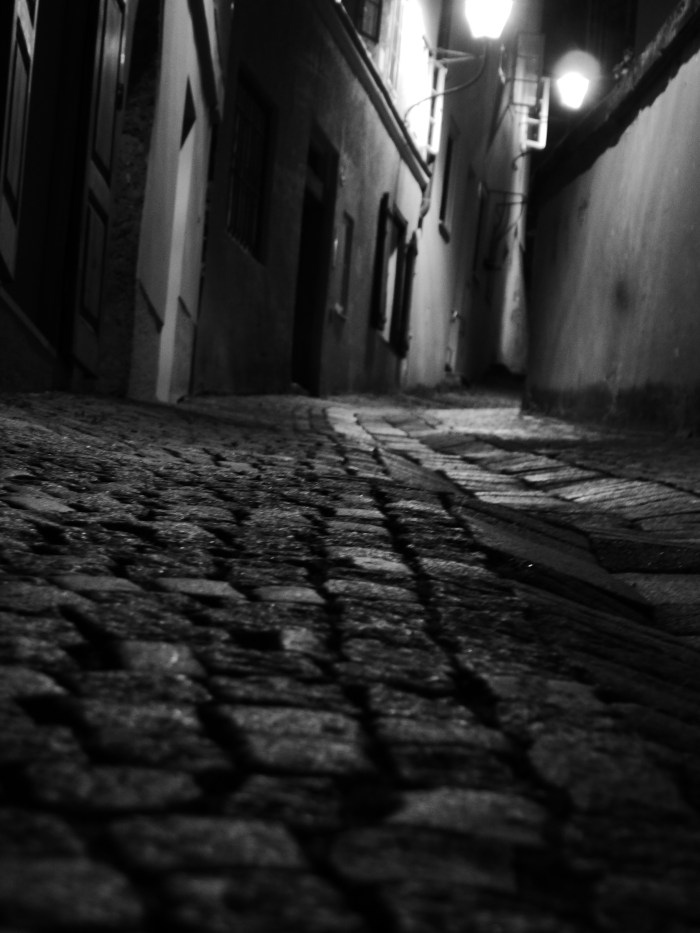
A gladness in the air feels almost too cool against the skin. The day is ending not in grey but in pale blue. A hazy blue is even reflecting off the stones of the street. It hurts to live, but the pain is remote. Feeling doesn’t matter.
— Fernando Pessoa, The Book of Disquiet. (Penguin […]
Macabre — Liminal Narratives
Ghost signs, as we have seen, haunt the margins of many zones. Here, fixed categories blur before our eyes. These faded imprints, inked or carved on shop face or wall, elide past, present, future, materiality, insubstantiality, presence and absence. To those that care to listen, they murmur of long-forgotten brands — cigarettes, flour, razors — […]
Charles Bukowski — The Vale of Soul-Making
they thought I had guts they were wrong I was only frightened of more important things
— Charles Bukowski, from “Wall Clock,” Open All Night: New Poems. (Black Sparrow Press, September 1, 2000)
Allen Ginsberg — The Vale of Soul-Making
I don’t do anything with my life except romanticize and decay with indecision.
— Allen Ginsberg, The Book of Martyrdom and Artifice: First Journals and Poems: 1937-1952. (Da Capo Press; 1st Da Capo Press Ed edition November 1, 2006)
Homage to “Manhatta” — For Earth Below

Antonin Artaud – Ma colère… — BEAUTY WILL SAVE THE WORLD

Ma colère ne changera pas les choses du tout au tout, si, elle les changera du tout au tout, ce qui veut dire que j’en viendrai à ce que je ne cesse de regretter de ne pas être : un homme différemment conformé, capable de trouver le verbe rétensif, réservé, recoudé, abstensif, affirmatif, dont toutes […]
via Antonin Artaud – Ma colère… — BEAUTY WILL SAVE THE WORLD
What a tourist saw on a trip to New York in 1970 — Ephemeral New York

In March 1970, a traveler now living in Rotterdam paid a visit to New York City. Jaap Breedveld was in his 40s at the time. Like many tourists, he took photos that reflect the typical itinerary of a sightseer from overseas, like Times Square (above, with the old Howard Johnson’s at 46th Street on the […]
via What a tourist saw on a trip to New York in 1970 — Ephemeral New York
In Memory: “Even aimless journeys have a purpose.” — Art of Quotation
“Even aimless journeys have a purpose.” Tony Horwitz, 1959-2019, author, journalist, Pultizer Prize winner, quote from “One for the Road“
via In Memory: “Even aimless journeys have a purpose.” — Art of Quotation
Paul Auster’s New York
New York was an inexhaustible space, a labyrinth of endless steps, and no mater how far he walked, no matter how well he came to know its neighborhood and streets, it always left him with the feeling of being lost. Lost, not only in the city, but within himself as well. Each time he took a walk, he felt as though he were leaving himself behind, and giving himself up to the movement of the streets, by reducing himself to a seeing eye, he was able to escape the obligation to think, and this, more than anything else, brought him to a measure of peace, a salutary emptiness within… Motion was of the essence, the act of putting one foot in front of the other and allowing himself to follow the drift of his own body. By wandering aimlessly, all places became equal, and it no longer mattered where he was. On his best walks, he was able to feel that he was nowhere. And this, finally, was all he ever asked of things: to be nowhere. New York was the nowhere he had built around himself, and he realized that he had no intention of ever leaving it again.
Paul Auster in City of Glass as quoted in Paul Auster’s New York, Henry Hold and Company, New York)
 Naked Cities Journal
You must be logged in to post a comment.