Place/Space/Writing

How do we live in our cities? How do we meaningfully interact with them in a world ever-increasingly devoted to time-functional tasks and the economic engine that has become the driving force behind all of the world’s great cities?

Our challenge is to slow down, to see and notice our cities and engage with them at the microcosmic level to enjoy the myriad small things that go to make up the joys of urban environment as well as our own habitation within it.

My interest in these questions was profoundly inspired the work  of George Perec, most particularly, his brilliant collection of meditations on place and space ­ Species of Spaces and Other Pieces which take us from the street, to the apartment and even to the writing desk in an examination of how we interact with our spaces both public and private.

Perec was a master of what I call ‘writing the mundane’: through taking time to dig deeply into the everyday, to see and notice the world around us with acute attention to detail, Perec becomes a master of taking such seemingly mundane interactions – the objects on my work-table, what I can observe in a public square or street, what I can say about the private spaces that I live in – and turning them into some of the most insightful and imaginative literary depictions of the arts of everyday life.

From the village to the mega-city we live in a kaleidoscope of cultures that are as infinitely diverse as the stories of that diversity which emerge from the streets, lanes, gutters and built environments envelope them.

Naked Cities Journal is about sharing these stories of the minutiae of everyday life from different cultures and different storytellers from around the globe.

Marcus D. Niski,  June 2017

The Camera Eye: II – by Marcus D. Niski

Blaise Cendrars: The Poet’s Camera Eye

[Travel Poems; Kodak series]

The camera eye is a technique that uses acute observation as a basis for writing. The camera eye implies taking visual snapshots of scenes from life and transferring those observations into immediate textual portraits of the observed phenomenon.

In its poetic form, the work of Blaise Cendrars is probably one of the best examples of poetry based on exceptional observational attention to detail from scenes observed in life.

In the typically flamboyant style that Cendrars would become famous for throughout his writing life, Cendrars embarked upon a series of poems known as the Kodak Poems (1924) that attempted to employ a technique of ‘verbal photography’ which, as Anne Reverseau* writes, was aimed at “… convey[ing] a cinematographic or photographic model [of poetry] … we are reading descriptive poetry and vignettes by a writer-reporter. The “documentary” aesthetic thus sets the “horizon of expectation” for these poems…”

Whilst Cendrars was controversially accused of in fact using a montage of cut-up texts  plagiarized “…from the adventure novels of Gustave Le Rouge…” – the ruse later allegedly admitted by Cendrars himself (which is typical of Cendrars’ own mischievous self-mythologizing as a writer) –  Cendars nevertheless demonstrates himself to be an uncanny  master of the use of visual imagery or ‘cinepoetics’ in his texts whether using his own words or allegedly appropriating those of another writer (Kathy Acker is worth mentioning here as a contemporary reference point for similar controversies embroiling her work).

The Kodak poems saga no doubt represents just one of the many imbroglios that Cendrars was involved in throughout his charismatic and often turbulent career: indeed, he seemed to either specialize in, or actively court, controversy throughout much of his life. I have always been intrigued by Cendrars’ work as well as the scholarship surrounding it, and accordingly, I have extracted below an excellent piece of writing on the Kodak poems which deals with some of the fascinating mechanics of the Kodak poems controversy.

The Kodak Poems Saga…

In her highly engaging essay on Cendrars and the ‘Kodak saga’ entitled, Kodak Modernism: Avant-Garde Poetry in the Age of Popular Photography [1] Elena Gualtieri documents the essential dynamics of the saga involving Cendards and the Kodak company itself over the use of the trademark name ‘Kodak’ –

In June 1924 Blaise Cendarrs was visiting Brazil when he received  the first edition of his latest collection of poems, Kodak. Published by Stock with a cover design by Frans Masereel and frontispiece portrait by Francis Picabia , Kodak comprised sixty-three poems that looked like the simple vignettes caught by the poet during his travels to the U.S and beyond, and put down with the apparent immediacy and directness of a tourist’s photographic record…

As Gualtieri  goes on the explain, it was here that Cendrars unexpectedly felt the wrath of the Kodak Company in New York who, through their lawyers, took a different view of Cendrars’ creative exploits in using the name Kodak as a direct infringement of their trademark name [!]:

… The poems’ easy charm was, however, lost on the makers of the [sic] Kodak. At the publication of the book, Stock received ‘a notarized letter from the American firm of Kodak Co’ which objected to the unauthorized use of their trademark. The publishers replied that they believed it acceptable ‘to use a commercial  name once that name has acquired the sense of an object in everyday language’, and that the company itself had made of the commercial name ‘the synonym of the photographic apparatus that accompanies the traveller’. Their position was that the appearance of Kodak on Cendrars’s title page was effectively proving free publicity for the company. For the Kodak lawyers, though, such unlicensed use of their trademark was ‘on the contrary detrimental to it, because it distracted customers  form the precise uses the company’s products sold by their company’. While the company did have the legal power to request that the publication be withdrawn from sale, it eventually settled for the commitment that any subsequent editions of the poems would be published under a different title. **

Cendrars was undoubtedly an extraordinary admix of raconteur, provocateur, self-styled swashbuckling adventurer, but above all, a brilliantly observant poet. He is without doubt one of the great heroes in my literary pantheon and a source of endless inspiration in reading of his adventures both fictive and real.

He was a unique and spirited visionary that will unquestionably continue to inspire and confound many generations of new readers brave enough delve into his exotic and highly eclectic body of work.

*See: ‘Kodak or Documentaires’, Anne Reverseau as found at http://www.litteraturesmodesdemploi.org Viewed 31 May, 2017

** The title was in  fact changed to Documentaires (Documentaries)

Editors Note: An excellent critical biographic profile of Cendrars’ kaleidoscopic and sometimes confabulated life can be found within Richard Sieburth’s review of Cendrars’ Oeuvres Autobiographiques Complètes ‘Blaise Cendrars in the sky’ in Time Literary Supplement, n.d [which sadly seems to have disappeared from open access online].

Details of the collection itself can be found at the publishers website at:

http://www.gallimard.fr/Catalogue/GALLIMARD/Bibliotheque-de-la-Pleiade/OEuvres-autobiographiques-completes

See also an excellent interview with Cendrars on The Art of Fiction as appeared in The Paris Review which can be found at: https://www.theparisreview.org/interviews/4388/blaise-cendrars-the-art-of-fiction-no-38-blaise-cendrars

Marcus D. Niski, May 2017


The Camera Eye: I – by Marcus D. Niski

Imagine that you are now a Human Camera …

The Camera Eye

John Dos Passos’ [U.S.A]

John Dos Passos was justifiably lauded as one of the twentieth century’s great American writers. His U.S.A trilogy, in which the stream of consciousness technique known as The Camera Eye can be found, is actually a compendium of three separate novels – The 42nd Parallel, 1919, and The Big Money — which form a ”collective portrait of America, shot through with sardonic comedy and brilliant social observation.”

Throughout the novel, as the Library of America editorial for the U.S.A trilogy suggests, Dos Passos employs –

A startling range of experimental devices [that] captures the textures and background noises of 20th-century life: “Newsreels” with blaring headlines; autobiographical “Camera Eye” sections with poetic stream-of-consciousness; “biographies” evoking emblematic historical figures like J.P. Morgan, Henry Ford, John Reed, Frank Lloyd Wright, Thorstein Veblen, and the Unknown Soldier. Holding everything together is sheer storytelling power, tracing dozens of characters from the Spanish-American War to the onset of the Depression.

The Camera Eye, to me, represents a metaphor for exactly what it implies: the notion that the human eye can be used as a ‘recording camera’ in connection with reportage that is written down, either in the form of a stream of consciousness, or as a focused tool for delivering acute narrative descriptions of the world around us.

Often I have taken my students into the streets and laneways and asked them – poised at a fixed position – to SPONTANEOUSLY write down what they see in front of them and without THINKING about it too much, to try to RECORD as accurately as they can what they SEE, as well as to SLOW DOWN their mind as an enabling tool in the process.

Next time you have your notebook in hand try this simple exercise: you might be very surprised what springs from it. Indeed, the continued honing of your skills using this observational technique can sometimes lead to some remarkable results.

Marcus D. Niski,  June 2017

Feeling totally isolated and dépaysé in his tiny digs on West 96th Street, unable to find work, he roamed the city, taking in the spectacle of its modernity – the dizzying downtown skyscrapers, the aerial vectors of its subway system, the giant billboards, the vaudeville movie theatres, the electrified nights…

– Richard Sieburth describing Blaise Cendrars’ encounters with New York in a review of Cendrars’ Oeuvres Autobiographiques Complètes ‘Blaise Cendrars in the sky’ in Times Literary Supplement , n.d


 INTERVIEWER
All writers complain of the constraint under which they work and of the difficulty of writing.

BLAISE CENDRARS
To make themselves sound interesting, and they exaggerate. They should talk a little more about their privileges and how lucky they are to be able to earn some return from the practice of their art, a practice I personally detest, it’s true, but which is all the same a noble privilege compared with the lot of most people, who live like parts of a machine, who live only to keep the gears of society pointlessly turning. I pity them with all my heart. Since my return to Paris I have been saddened as never before by the anonymous crowd I see from my windows engulfing itself in the métro or pouring out of the métro at fixed hours. Truly, that isn’t a life. It isn’t human. It must come to a stop. It’s slavery … not only for the humble and poor, but the absurdity of life in general.

When a simple character like myself, who has faith in modern life, who admires all these pretty factories, all these ingenious machines, stops to think about where it’s all leading, he can’t help but condemn it because, really, it’s not exactly encouraging.

Blaise Cendrars, in The Art of Fiction No. 38, Interviewed by Michel Manoll in The Paris Review, Issue 37, Spring 1966.

Walter Benjamin’s One Way Street : The Writer’s Technique in Thirteen Thesis

By Marcus D. Niski

“Think about Benjamin, the writer or the thinker, and he has almost always been there first, and written ahead of you…”

– Brian Hanrahan, From ‘For Future Friends of Walter Benjamin’, Los Angeles Review, July 26, 2012.

Walter Benjamin’s classic manifesto One Way Street: The Writer’s Technique in Thirteen Thesis is a pure crystalline gem that summarizes Benjamin’s approach to his writing craft in a highly original, quirky, and novel way which explains some of the classic hallmarks of Benjamin’s writing be it in his descriptive, theoretical or philosophical musings on a truly kaleidoscopic range of subjects, or his film criticism, travel memoir or critical theory essays.

Benjamin revelled in the minutiae of everyday life as Susan Sontag writes in her Introduction to One Way Street –

Much of the originality of Benjamin’s arguments owes to his microscopic gaze (as his friend and disciple Theodore Adorno called it), combined with his indefatigable command over theoretical perspectives. “It was the small things that attracted him most”, writes Scholem. He loved old toys, postage stamps, picture postcards, and such playful miniaturizations of winter inside a glass globe that snows when it is shaken…

Best known for his massive unfinished opus The Arcades Project (Das Passagen-Werk), Benjamin emerged from almost complete obscurity – save those few who were familiar with his intellectual and philosophical writings – to become a true literary comet that illuminated all of those subjects which he touched upon.

Benjamin is undoubtedly one of my favourite literary writers and One Way Street undoubtedly one of my favourite ‘self-observational’ Benjamin pieces.

Walter Benjamin, One-Way Street

Post No Bills

The Writer’s Technique in Thirteen Theses

I. Anyone intending to embark on a major work should be lenient with himself and, having completed a stint, deny himself nothing that will not prejudice the next.

II. Talk about what you have written, by all means, but do not read from it while the work is in progress. Every gratification procured in this way will slacken your tempo. If this regime is followed, the growing desire to communicate will become in the end a motor for completion.

III. In your working conditions avoid everyday mediocrity. Semi-relaxation, to a background of insipid sounds, is degrading. On the other hand, accompaniment by an etude or a cacophony of voices can become as significant for work as the perceptible silence of the night. If the latter sharpens the inner ear, the former acts as a touchstone for a diction ample enough to bury even the most wayward sounds.

IV. Avoid haphazard writing materials. A pedantic adherence to certain papers, pens, inks is beneficial. No luxury, but an abundance of these utensils is indispensable.

V. Let no thought pass incognito, and keep your notebook as strictly as the authorities keep their register of aliens.

VI. Keep your pen aloof from inspiration, which it will then attract with magnetic power. The more circumspectly you delay writing down an idea, the more maturely developed it will be on surrendering itself. Speech conquers thought, but writing commands it.

VII. Never stop writing because you have run out of ideas. Literary honour requires that one break off only at an appointed moment (a mealtime, a meeting) or at the end of the work.

VIII. Fill the lacunae of inspiration by tidily copying out what is already written. Intuition will awaken in the process.

IX. Nulla dies sine linea – but there may well be weeks.

X. Consider no work perfect over which you have not once sat from evening to broad daylight.

XI. Do not write the conclusion of a work in your familiar study. You would not find the necessary courage there.

XII. Stages of composition: idea – style – writing. The value of the fair copy is that in producing it you confine attention to calligraphy. The idea kills inspiration, style fetters the idea, writing pays off style.

XIII. The work is the death mask of its conception.

From, One Way Street and Other Writings, Surkampf Verlag, Frankfurt.

Marcus D. Niski,  May 2017
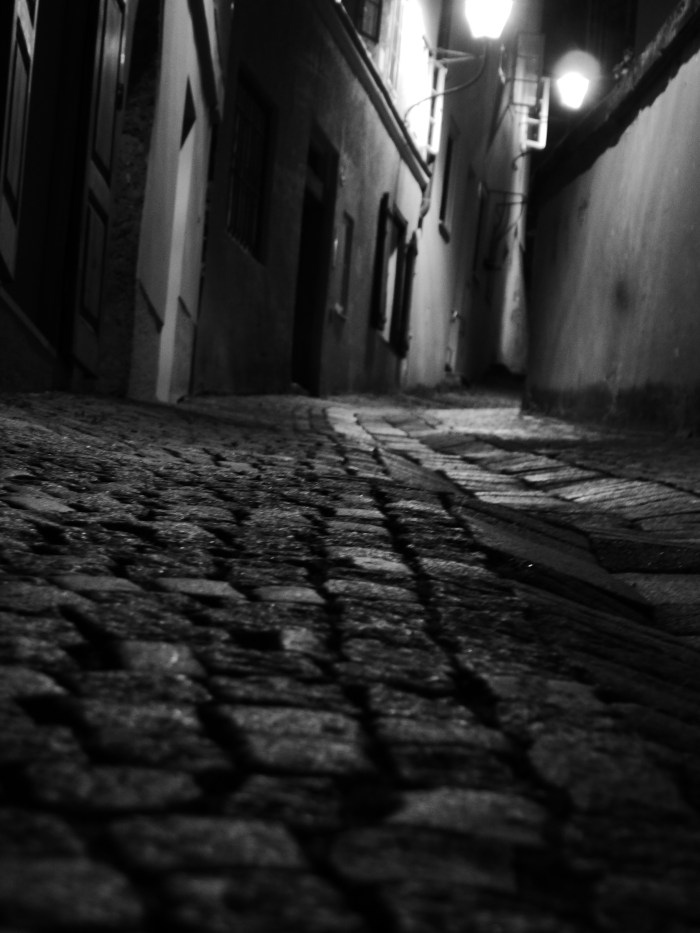
 

“The chief means of travel will be walking,”  Gruen said, of his reimagined metropolis. “Nothing like walking for peace of mind.” 

– ­­Victor Gruen


I straighten my papers
I set up a schedule
My days will be busy
I don’t have a minute to lose
I write.

Blaise Cendrars in Complete Poems, 1992, tr. Ron Padgett

“There is no truth. There’s only action, action obeying a million different impulses, ephemeral action, action subjected to every possible imaginable contingency and contradiction. Life.”

– Blaise Cendrars


The crowd is his element, as the air is that of birds and water of fishes.

His passion and his profession are to become one flesh with the crowd. For the perfect flaneur, for the passionate spectator, it is an immense joy to self up house in the heart of the multitude, amid the ebb and flow of movement, in the midst of the fugitive and the infinite. To be away from home and yet to feel oneself everywhere at home; to see the world, to be at the centre of the world, and yet to remain hidden from the world – such are a few of the slightest pleasures of those independent, passionate, impartial natures which the tongue can but clumsily define. The spectator is a prince who everywhere rejoices in his incognito. The lover of life makes the whole world his family…

– From, Charles Baudelaire, “The Painter of Modern Life,” trans. Jonathan Mayne, in The Painter of Modem Life and Other Essays (London; Phaidon, 1964).